Product design that connects UX, UI, and the final build
Align user needs, business goals, brand, and technical constraints in one product design process that reduces handoff gaps. See how better products ship.
By Ajay Khatri ·
TL;DR
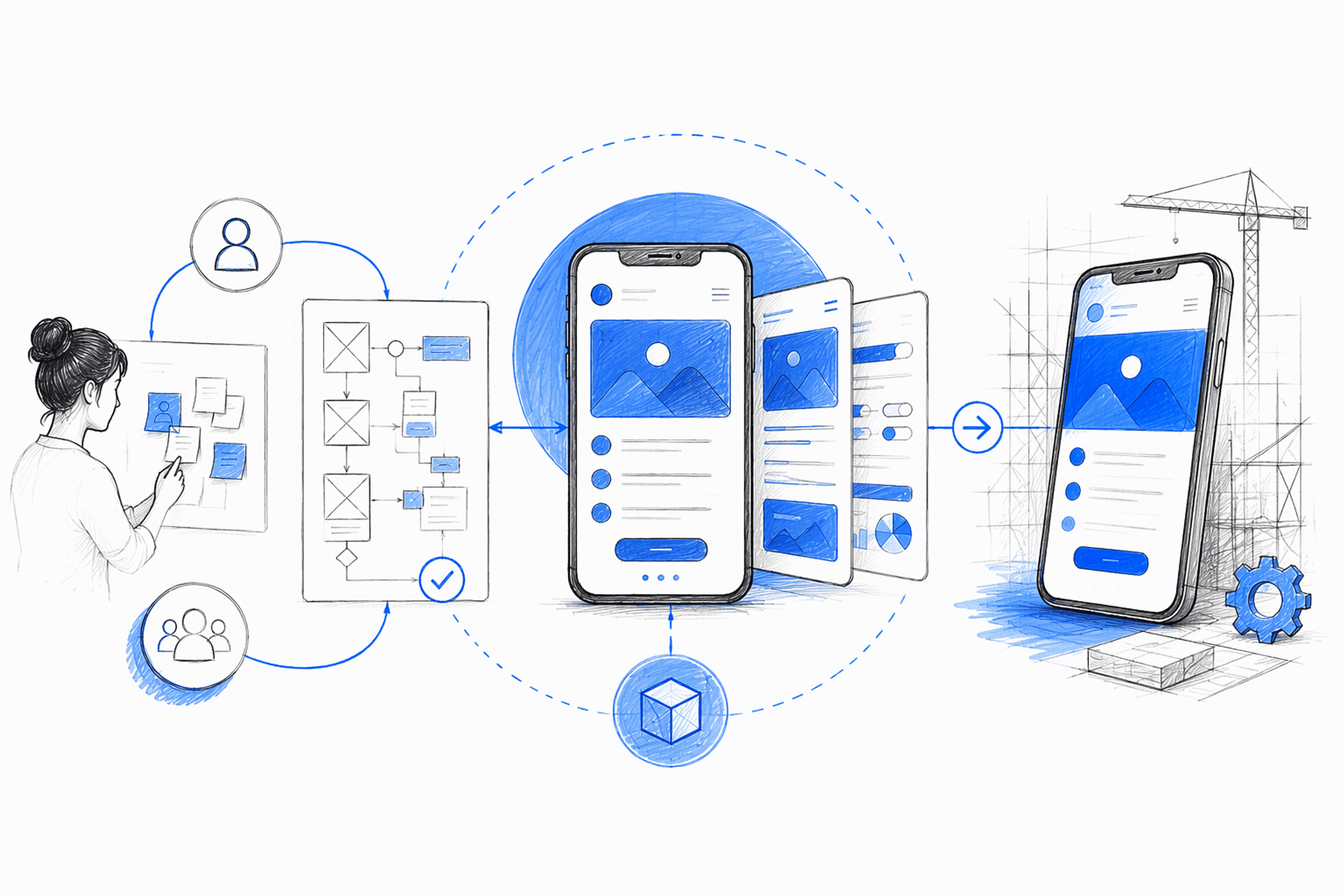
Product design is more than a polished Figma file. It turns user needs, business goals, brand identity, and technical constraints into a useful product that can ship. We connect problem framing, UX, UI, prototyping, and frontend thinking so that fewer ideas get lost between strategy and implementation.
Table of Contents
- TL;DR
- What product design means for digital products
- Product design vs UX, UI, and frontend development
- My product design process: structured, not rigid
- From discovery to a clear, testable product direction
- Prototypes, usability testing, and product design deliverables
- Design systems and frontend awareness: preserving quality through implementation
- How to evaluate product design work before you hire
- Hiring a freelance product designer in Bangalore
- Product design FAQs
- FAQ
- Turn a messy product brief into a build-ready experience
What product design means for digital products
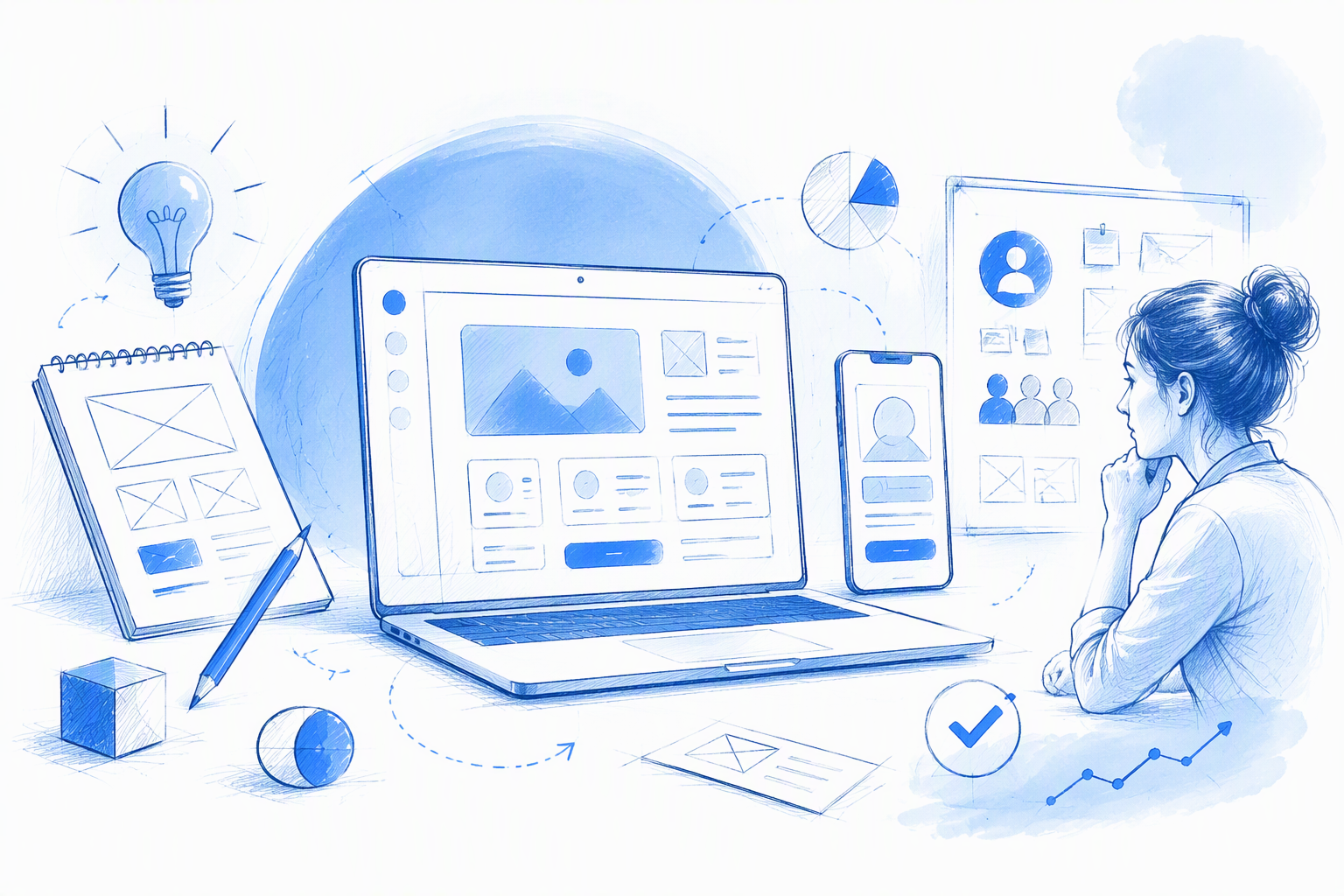
Product design solves user and business problems across the complete experience. For digital products, that includes websites, apps, platforms, dashboards, and software—not only physical or industrial goods.
The work connects usability with goals such as activation, conversion, retention, operational efficiency, and differentiation. A product can look polished and still fail if people cannot understand it, developers cannot implement it effectively, or the experience does not support the intended behaviour.
Our approach moves between problem framing, UX, UI, prototyping, and implementation. That continuity helps preserve the original intent as an uncertain requirement becomes a shipped experience.
Product design is an outcome, not a Figma file
Figma files, wireframes, prototypes, and specifications are tools. They support decisions, but visual polish alone does not prove those decisions are useful or commercially sound.
Strong digital product design should be:
- Useful to its intended audience
- Aligned with a defined business objective
- Feasible within technical and operational constraints
- Distinctive without compromising clarity
- Responsive across relevant devices
- Detailed enough to build and validate
A beautiful mockup can conceal unclear navigation, inaccessible interactions, missing states, or unrealistic component behaviour. A strong product experience makes its logic visible and retains its quality through implementation.
What a digital product designer actually does
A digital product designer may contribute to:
- Stakeholder and user discovery
- Problem framing and prioritisation
- Information architecture and task flows
- Wireframes and content hierarchy
- Interaction and visual design
- Prototyping and usability testing
- Components and interface systems
- Responsive behaviour
- Developer collaboration
- Implementation review
- Post-launch iteration
The balance depends on the project. An early product may need deeper definition and flow exploration. A mature platform may need a focused redesign, clearer component logic, or a more recognisable visual identity.
Our end-to-end UI and UX design workflow shows how these activities connect from the product goal through production.
Product design vs UX, UI, and frontend development
Product design, UX design, UI design, and frontend development overlap, but they do not have identical responsibilities.
| Role | Primary focus | Typical outputs | Main ownership |
|---|---|---|---|
| Product designer | Complete product problem and experience | Flows, prototypes, UI, systems, validation | Connecting user, business, and delivery decisions |
| UX designer | Usability, structure, and behaviour | Research, journeys, architecture, wireframes | How the experience works |
| UI designer | Visual and interaction craft | Screens, visual systems, states, motion | How the experience looks and responds |
| Frontend developer | Production implementation | Components, application logic, responsive code | How the interface functions |
UX and UI are two lenses on the same experience. Separating them too sharply can produce coherent flows with forgettable interfaces or striking screens that remain frustrating to use.
Product design also touches strategy, research, content, brand, analytics, and engineering. We do not expect one designer to replace every specialist, but they should understand how each discipline affects the product.
When you need a product designer
We recommend broad product-design ownership when:
- The brief describes a goal rather than a defined problem
- Several journeys or product areas are connected
- UX, UI, and implementation decisions must remain coherent
- The product needs both usability and distinction
- The team needs continuity from idea to delivery
- Requirements are likely to change through discovery
This model suits lean teams, early-stage products, redesigns, and focused initiatives without several specialist design roles. Our guide to finding a product designer who can actually ship explains how to assess that broader ownership.
When a UX, UI, or frontend specialist makes more sense
A specialist may be the better choice when the problem is already narrow. Generative research may call for a research-led UX specialist, while a brand-heavy launch may need concentrated visual craft. A mature product with settled designs may mainly need engineering capacity.
Even then, complementary roles need clear ownership. We define who makes each decision, what evidence is available, which dependencies matter, and how implementation will be reviewed. Otherwise, more expertise can create more handoffs.
For location-specific hiring, our guide to evaluating UX designers in India helps teams compare scope, evidence, and collaboration fit rather than relying on titles.
My product design process: structured, not rigid
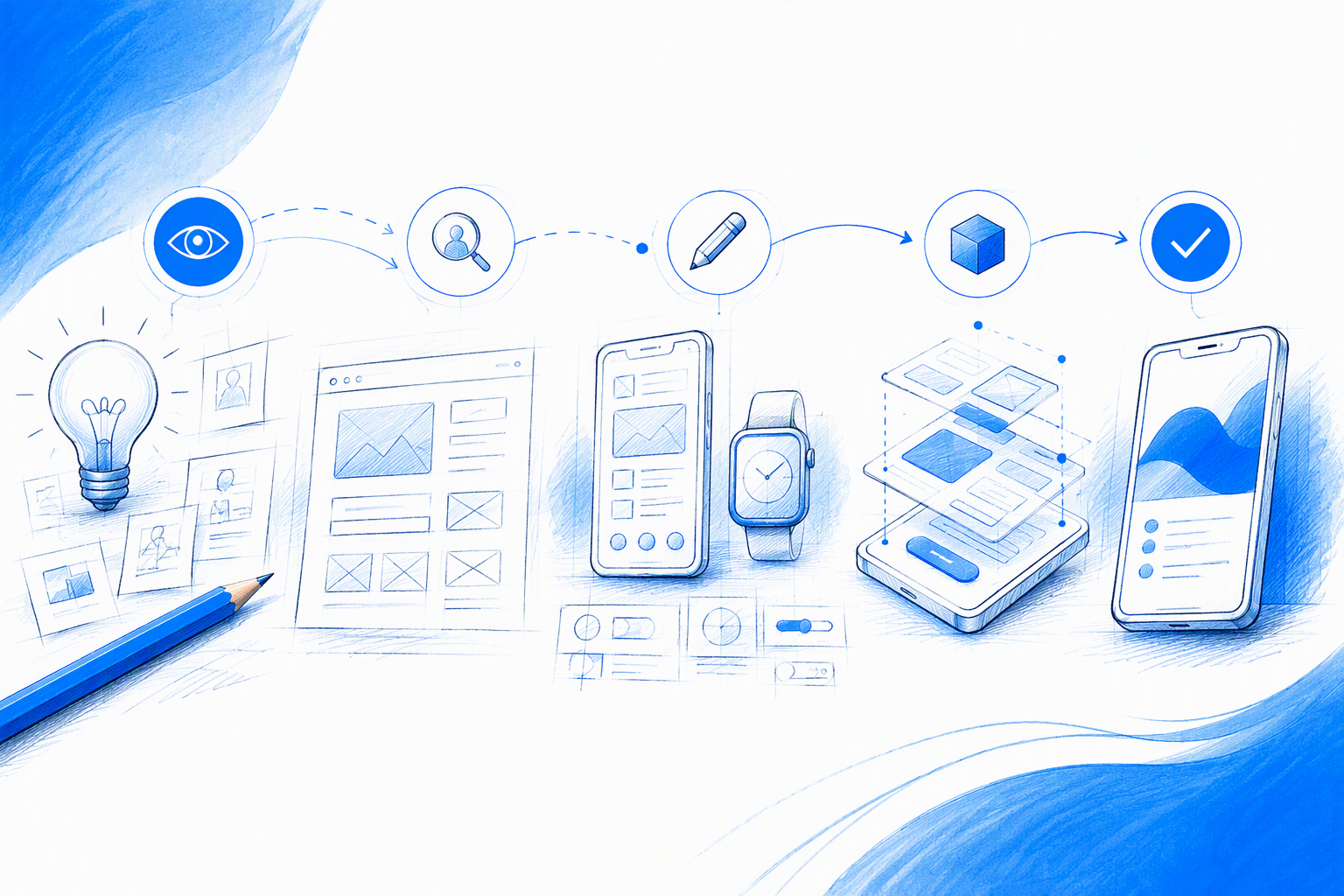
Our product design process is structured enough to create momentum but flexible enough to respond to new evidence:
- Understand the context
- Focus the problem
- Explore possible directions
- Prototype important interactions
- Validate risky assumptions
- Build collaboratively
- Measure the result
- Revisit decisions using new evidence
These are not fixed gates. A prototype may reveal that the problem was framed incorrectly. A technical constraint may change a flow. Implementation may expose a missing state that belongs in the wider system rather than a one-off patch.
Risk determines where we spend time. An unfamiliar workflow may require deeper discovery, while a visual refresh may demand more attention to interface systems, responsive behaviour, and implementation quality.
Example: turning “improve activation” into a focused product problem
Imagine a SaaS team asking us to “improve activation.” That statement describes an ambition, not a solvable design problem.
We would clarify:
- Which user group is struggling?
- What action represents meaningful activation?
- Where do people leave the journey?
- What behavioural or qualitative evidence exists?
- Which technical, product, or compliance constraints apply?
- What change would count as progress?
Suppose new administrators reach the setup screen but leave before inviting colleagues. Interviews and support messages indicate that they cannot tell which information is required or whether they can edit it later.
The working problem becomes more specific: new administrators need a clearer, lower-risk setup path so they can complete the initial configuration and invite their team. We can then test assumptions about trust, complexity, permissions, and setup order.
From flow to interface to shipped experience
We might map the existing onboarding flow, remove unnecessary decisions, reorganise the hierarchy, and sketch several setup sequences. A prototype can test the riskiest moments before detailed production work begins.
The final interface also needs responsive behaviour, validation, empty states, loading states, errors, component logic, and clear feedback. During implementation, design and frontend decisions continue to shape one another.
After launch, we review the agreed activation signal and use what we learn to plan the next iteration. This continuity is central to freelance product design workflows that lead to shipped experiences.
From discovery to a clear, testable product direction
Discovery should reduce uncertainty rather than become an open-ended research exercise. We combine stakeholder conversations, analytics, product reviews, user evidence, support patterns, commercial priorities, and technical constraints to identify the decision that matters.
A requested feature is not always the underlying need. “Add a dashboard” could mean users lack visibility, managers need reporting, or the business wants to encourage engagement. Each objective may require a different response.
Useful discovery captures:
- The affected audience
- The relevant task or behaviour
- Existing evidence
- Assumptions and unknowns
- Business priorities
- Success criteria
- Technical, operational, and brand constraints
Flows and information architecture then make hidden complexity visible before detailed UI and development begin.
Working without a perfect brief
We do not wait for every unknown to disappear. Instead, we establish a working direction by asking:
- Who is affected by the current problem?
- What should become easier or more valuable?
- What behaviour should change?
- What evidence supports the request?
- Which assumptions carry the greatest risk?
- What cannot change?
- How will we recognise improvement?
A concise problem statement, journey map, flow, annotated wireframe, or assumption list can align a team more effectively than a long requirements document filled with unresolved decisions.
User feedback informs judgment—it does not replace it
User feedback can uncover confusion, missing context, mismatched expectations, and behavioural friction. It shows where an experience fails, but it does not automatically prescribe the right interface.
People often suggest solutions through the products and patterns they already know. We interpret those suggestions alongside observed behaviour, business priorities, technical feasibility, and consistency across the experience.
Our goal is not to implement every request. It is to understand the need behind it and choose the strongest response.
Prototypes, usability testing, and product design deliverables
Product design deliverables should support the decision at hand. Low-fidelity wireframes are often more useful than polished screens when a team is still debating structure, sequence, or scope.
Prototypes can align stakeholders, clarify interactions, support usability testing, and expose implementation questions. We do not need to simulate every detail. We need to test assumptions that could undermine the direction.
Anyone evaluating a build-ready UI/UX design service should ask how each output advances the product rather than simply counting screens.
Typical deliverables by project stage
| Project stage | Typical deliverables | Decision supported |
|---|---|---|
| Discovery | Goals, evidence, constraints, assumptions, problem definition | What problem should we solve? |
| Structure | Architecture, journeys, flows, hierarchy, wireframes | How should the experience work? |
| Experience | Prototypes, findings, responsive UI, states, interactions | Is the direction clear and usable? |
| Delivery | Components, assets, criteria, implementation review | Can it be built accurately? |
| Iteration | Findings, issues, priorities, experiments | What should improve next? |
The package should reflect project risk. A short conversion flow does not need the same supporting material as a complex platform with several user roles.
How to test without slowing delivery
We match the method to the decision:
- Concept checks for comprehension and relevance
- Task-based prototype sessions for important workflows
- Stakeholder walkthroughs for operational constraints
- Analytics and recordings for live behavioural friction
- Coded interaction tests when responsiveness or performance matters
We test high-risk uncertainties early. Lower-risk refinements can be resolved during implementation if design review remains part of delivery.
Design systems and frontend awareness: preserving quality through implementation
Implementation quality begins during design, not at the handoff meeting. Frontend awareness influences layout logic, responsiveness, component architecture, accessibility, interaction states, performance, and feasibility.
Consider a dashboard with a dense table. A desktop composition may look convincing in Figma but fail on a smaller screen. Early technical thinking raises better questions: Which columns are essential? Should rows become cards? Is horizontal scrolling understandable? Which actions need persistent access?
Shared component thinking reduces duplicated work and translation gaps. It does not replace engineering expertise; it makes design and engineering conversations more precise.
Why another handoff document is not always the answer
Static specifications describe an intended result but cannot resolve every behavioural or architectural question. We prefer early discussions about:
- Component boundaries
- Responsive rules
- Dynamic content
- Loading, empty, success, and error states
- Keyboard and touch behaviour
- Data limitations
- Performance implications
- Reusable interaction patterns
Addressing these questions during design reduces avoidable rework. Implementation review then becomes a continuation of the process rather than a final visual inspection.
Consistency without becoming interchangeable
Design systems improve consistency, but consistency alone does not create identity. A product built entirely from familiar components can be efficient yet generic.
We can create distinction through typography, composition, spatial rhythm, motion, imagery, data visualisation, content tone, and branded interaction patterns. The goal is not novelty on every screen. It is a coherent system with recognisable character where character adds value.
How to evaluate product design work before you hire
A product design portfolio should demonstrate thinking, decisions, execution, and outcomes. High-fidelity screens show visual capability, but they do not prove that the designer identified the right problem or shipped an effective solution.
Use this scorecard:
- Is the user and business problem clear?
- Is the designer’s contribution explicit?
- What evidence informed the direction?
- Which constraints shaped the work?
- What alternatives or trade-offs were considered?
- How did validation change the solution?
- Did the work reach implementation?
- What measurable or observable result followed?
Our breakdown of genuinely hireable product designer portfolio examples explores how to separate attractive presentation from credible capability.
What a strong product design case study should prove
A strong case study connects the original problem to the shipped result. It explains why the solution took its final form rather than presenting a flawless retrospective process.
We look for evidence that the designer understood the user and business need, connected flows with interface decisions, worked within real constraints, rejected weaker directions, collaborated through implementation, and reviewed the result.
Confidentiality may limit public detail. In that case, anonymised constraints, process samples, directional outcomes, references, or a thoughtful verbal walkthrough can still demonstrate capability.
Red flags behind polished mockups
Be cautious when a portfolio contains:
- No clear problem or target audience
- No meaningful constraints
- No explanation of personal contribution
- No rejected directions or trade-offs
- No shipped result
- Major decisions without reasoning
- Impact claims without credible evidence
Team outcomes should not automatically be attributed to one designer. Ask what they owned, influenced, produced, and reviewed.
A structured freelance product design hiring checklist can help teams verify these points before signing a contract.
Hiring a freelance product designer in Bangalore
An independent product designer can be a flexible partner for early-stage definition, focused initiatives, redesigns, and design-to-build continuity. Clients work directly with the person investigating the problem and making design decisions, which can reduce layers of translation.
Before starting, we recommend sharing:
- The product goal and current stage
- Primary users and markets
- Existing research or behavioural evidence
- Known technical and operational constraints
- The internal team and available specialists
- Timeline or launch dependencies
- Decision-makers and approval process
A messy brief is acceptable. Ambiguity is often where product design creates value, provided we can access relevant context and the team can make timely decisions.
For teams seeking a Bangalore-based product designer and full-stack creative, our work connects UX thinking, distinctive UI, and frontend-aware execution without separating the idea from delivery.
Questions to ask before choosing a product designer
Ask candidates:
- How do you define a problem when requirements are incomplete?
- How do you connect user evidence with business priorities?
- How do you decide what to prototype or test?
- How do you collaborate with developers?
- Do you review the implemented experience?
- How do you preserve brand distinction within reusable systems?
- What outcomes have your decisions influenced?
Strong answers include examples and trade-offs, not just process terminology.
Questions clients can expect from me
We will ask:
- What should become easier or more valuable for the user?
- What business behaviour should the product influence?
- Which assumptions carry the greatest risk?
- What evidence is already available?
- Which technical, operational, brand, or timing constraints matter?
- Who owns the final decisions?
- How will we know the work made an impact?
These questions turn an open brief into a focused direction. They also show whether the initiative needs broad product-design ownership or narrower specialist support.
Product design FAQs
Which software do product designers use?
Product designers use tools for interface design, prototyping, workshops, documentation, analytics, user testing, and implementation. The exact stack varies by team and product.
Tool familiarity is not proof of design ability. Problem framing, judgment, communication, interaction thinking, and execution quality matter more than memorising every shortcut.
Are there different types of product designers?
Yes. Product designers may work as broad generalists or lean towards UX, UI, growth, design systems, research, strategy, or technical implementation.
Titles vary between companies. We recommend evaluating the actual scope, case-study evidence, collaboration style, and delivered outcomes.
Is this the same as product design in operations management?
No. In operations management, product design may refer to planning physical goods for production, including materials, manufacturing requirements, quality, cost, and operational feasibility.
Here, we focus on digital product design for websites, applications, software platforms, interfaces, and their surrounding experiences.
Where can someone learn product design, and what about courses, jobs, or salary?
Product design can be learned through courses, practical projects, critique, mentorship, and collaboration with product and engineering teams. Roles and salaries vary by location, seniority, specialisation, company, and employment model.
When hiring, we place more weight on relevant case studies, decision quality, collaboration, shipped work, and credible outcomes than credentials alone.
FAQ
What does product design mean?
Product design means identifying a user and business problem, exploring possible responses, validating important assumptions, and carrying the chosen experience into implementation. In digital work, it connects UX, UI, content, technical constraints, and commercial objectives.
What are 20 careers in design?
Design careers include product designer, UX designer, UI designer, UX researcher, interaction designer, visual designer, service designer, content designer, brand designer, graphic designer, motion designer, web designer, design strategist, design systems designer, industrial designer, packaging designer, game designer, information designer, frontend designer, and creative technologist.
Where can I learn product design?
Courses, books, case-study analysis, mentorship, critiques, and hands-on projects can all help. We recommend practising with a real problem: define it, map the flow, prototype the experience, test key assumptions, consider implementation constraints, and explain the resulting decisions clearly.
What are the different types of product designers?
Common areas include generalist, UX-focused, UI-focused, growth, systems, research-heavy, strategic, and technically oriented product design. Because the boundaries are not standardised, compare responsibilities, portfolio evidence, product context, and implementation involvement rather than relying on titles.
Turn a messy product brief into a build-ready experience
Have a product that works but still feels unclear, generic, or fragmented? Start a conversation about your product and we can turn the user problem, interface, and technical reality into one focused, distinctive experience.