Freelance product design that turns product problems into shipped experiences
Turn complex product problems into validated, buildable experiences with strategy, UX, polished UI, and frontend insight. Explore the right engagement.
By Ajay Khatri ·
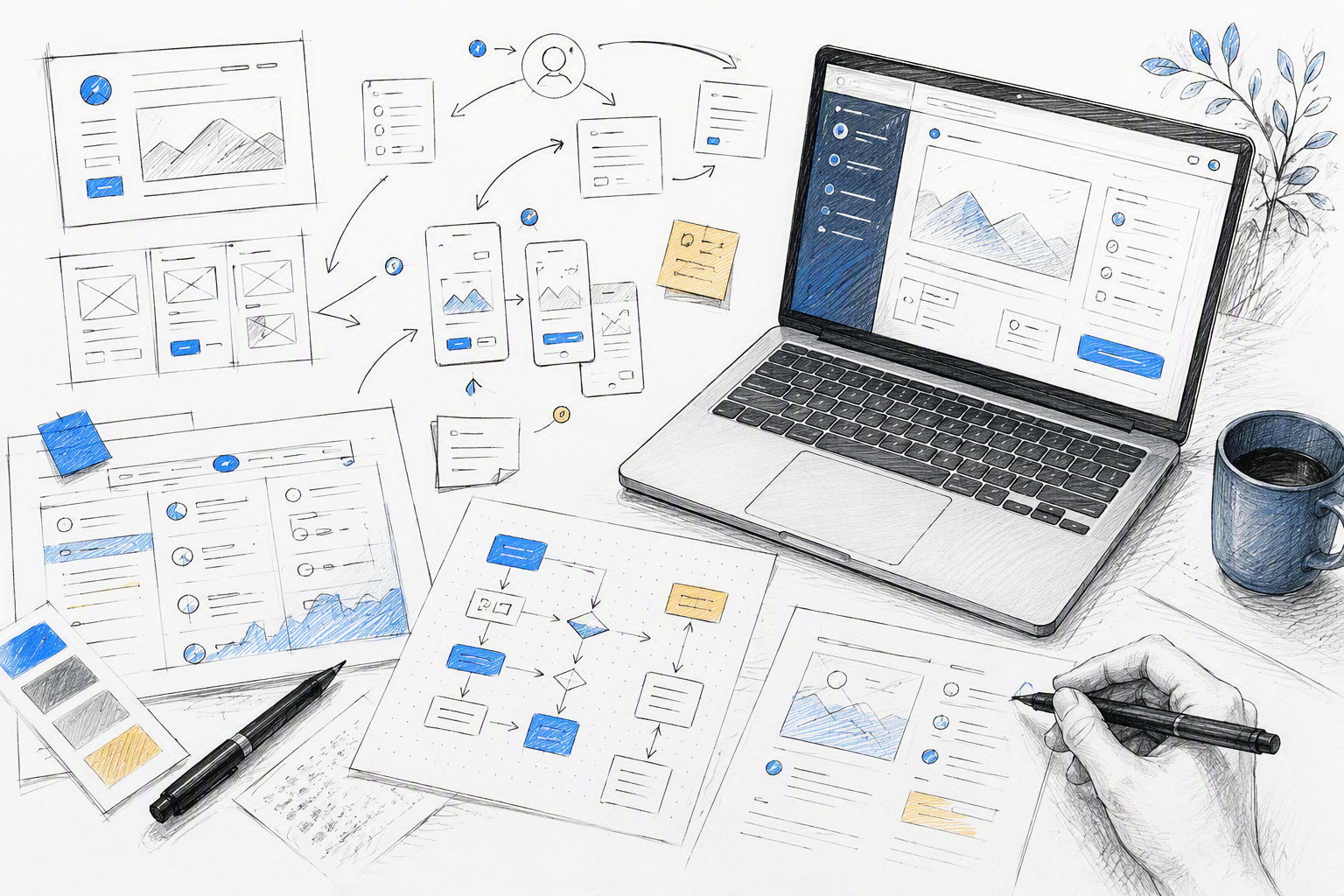
TL;DR
Freelance product design should deliver more than polished Figma screens. We connect product strategy, UX, contemporary UI craft, and frontend awareness to create distinctive experiences that teams can validate, build, and ship. The right engagement might be a focused sprint, fixed project, or ongoing retainer, depending on the challenge, urgency, and need for continuity.
Table of Contents
- Freelance product design from problem to shipped experience
- When freelance product design is the right hiring model
- Our freelance product design process: clarity before pixels
- Choose a project, sprint, or product design retainer
- How to scope product design when the brief is incomplete
- Freelance product design pricing: compare total cost, not just the rate
- How to evaluate a freelance product designer’s portfolio
- Questions to ask a freelance product design consultant
- Avoid the hidden costs and red flags of freelance design
- Hybrid product design, AI, and remote collaboration
- FAQ
- Bring us the product challenge
Freelance product design from problem to shipped experience
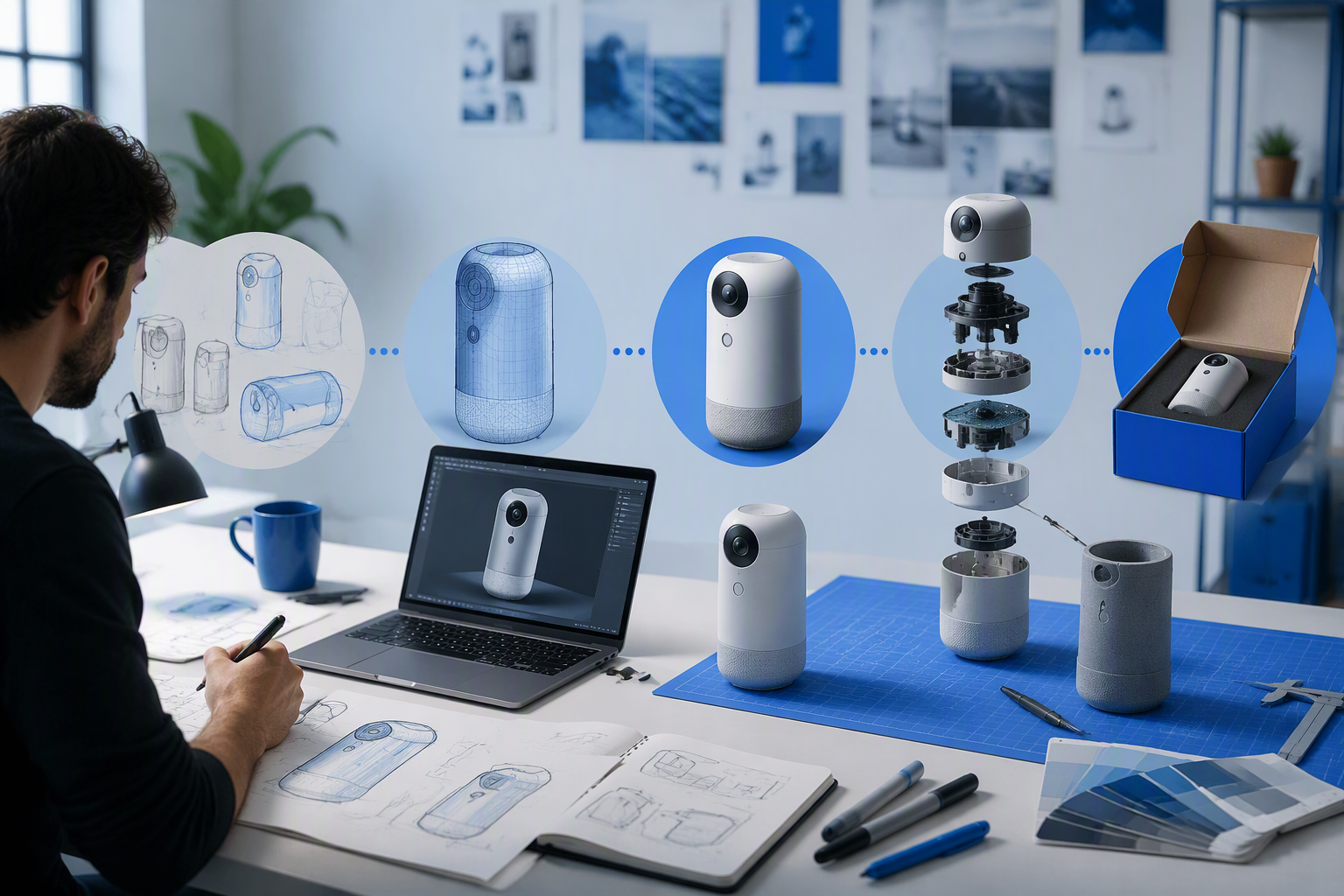 Teams rarely need another folder of attractive screens. They need freelance product design that turns an unresolved challenge into an experience they can validate, build, and ship without immediately creating a permanent role.
We provide senior UX, UI, and frontend-aware support for founders, hiring managers, and lean product teams. Our role is to connect product context, user needs, visual direction, and implementation rather than leave the team coordinating separate specialists.
What a freelance product designer can own
Depending on the engagement, we can own:
- Product discovery and UX audits
- Information architecture and user flows
- Wireframes and interactive prototypes
- UI design and visual direction
- Design systems and reusable components
- Developer handoff and collaboration
- Reviews of the implemented experience
We scope this work around the problem, not an arbitrary screen count. “Simplify account setup” is more useful than “design 20 screens” because it accounts for flows, states, responsiveness, validation, and technical constraints.
What frontend awareness changes
Frontend awareness brings component logic, breakpoints, permissions, loading behaviour, errors, and empty states into the design process early. Developers receive a coherent interaction model rather than a gallery of idealised screens.
That does not require compromising visual ambition. It helps us create distinctive interfaces that can still behave reliably in a real product.
When freelance product design is the right hiring model
Freelance support fits launches, redesigns, product transitions, defined challenges, and temporary capacity gaps. It gives a team focused senior ownership without forcing a permanent hiring decision before long-term demand is clear.
Freelancer vs full-time product designer
We recommend freelance support when the requirement is urgent, time-bound, specialised, variable, or still being defined. A full-time designer is usually more suitable when there is stable demand and the role must own continuous product operations, internal practices, or team development.
Independent designer vs design agency
An independent designer can reduce account layers and handoffs. The person discussing the challenge remains close to the design and implementation details.
An agency may suit programmes that require several disciplines working simultaneously at scale. For a focused challenge, however, more people do not automatically produce faster or better decisions.
Our freelance product design process: clarity before pixels
 Our process keeps progress, rationale, and decisions visible. An incomplete brief is acceptable because the early work converts uncertainty into a credible direction.
1. Product context and scope
We align on the business goal, users, evidence, technical environment, stakeholders, assumptions, and definition of success. We also establish who makes decisions and which dependencies could affect delivery.
2. Audit and opportunity framing
We review the existing experience, available research or analytics, content, competitor patterns, workflows, and implementation constraints. We then turn observations into prioritised opportunities rather than a cosmetic redesign list.
3. Concepts, validation, and detailed design
We explore relevant directions, prototype important interactions, and validate risky assumptions where practical. Once a direction is selected, we develop the core flows alongside responsive behaviour, edge cases, system states, and reusable components.
4. Handoff and implementation review
Handoff includes specifications, assets, interaction guidance, and direct developer collaboration. We remain involved during implementation so that technical questions are resolved without guesswork. The shipped experience—not the design file—is the real outcome.
Choose a project, sprint, or product design retainer
The right format depends on uncertainty, urgency, decision readiness, and continuity.
Fixed project
A fixed project suits a defined outcome with known stakeholders, agreed deliverables, and controlled feedback cycles. It becomes fragile when assumptions, revisions, dependencies, and change boundaries remain implicit.
Focused design sprint
A sprint can address an audit, risky workflow, early concept, prototype, validation exercise, or scope-definition phase. We use it to resolve a central uncertainty before the team commits to a broader project.
Ongoing retainer
A retainer supports recurring features, rapid prototypes, product iteration, design-system maintenance, and frontend quality reviews. The agreement should define reserved capacity, response expectations, priorities, meeting cadence, and overage rules.
How to scope product design when the brief is incomplete
A perfect product specification is not a prerequisite. When uncertainty makes a fixed quote unreliable, we recommend beginning with paid discovery, an audit, or a scope-definition phase.
Scope outcomes, not screen counts
Useful outcomes include simplifying account setup, validating a dashboard workflow, improving subscription management, or defining a responsive core journey.
Screen counts conceal complexity. A single interface may contain several permissions, errors, states, data conditions, and device behaviours.
Document assumptions and change boundaries
A credible scope should record:
- Included flows, platforms, and user groups
- Available evidence and technical dependencies
- Feedback rounds and decision deadlines
- Content and data requirements
- Implementation support
- The process for handling changes
This documentation supports informed trade-offs when requirements evolve.
What we need from the product team
We need access to a decision-maker, available research or analytics, technical constraints, and existing brand or system assets. The team should also identify who supplies missing content, data, and domain knowledge. Timely, consolidated feedback keeps delivery moving.
Freelance product design pricing: compare total cost, not just the rate
There is no responsible universal freelance product designer rate. Pricing depends on complexity, research requirements, platform coverage, visual ambition, system maturity, validation needs, and implementation involvement.
A low quote can become costly if developers must infer edge cases, responsive behaviour, component rules, and interactions.
Fixed fee, day rate, or retainer
- Fixed fee: Suitable for bounded outcomes and controlled dependencies.
- Day rate: Suitable for evolving scope or embedded collaboration.
- Retainer: Suitable for recurring priorities and reserved access.
Whichever model we use, assumptions, capacity, revisions, dependencies, expenses, and change handling should be explicit.
What a credible estimate should include
A useful estimate explains the problem, activities, expected outputs, timeline, review points, client responsibilities, exclusions, and implementation support. We recommend comparing coverage and delivery risk rather than headline rates alone.
How to evaluate a freelance product designer’s portfolio
Polished screens do not prove product judgment, facilitation skills, or delivery reliability. A useful portfolio explains how the work progressed from an uncertain problem to an implemented solution.
Look for decisions, constraints, and trade-offs
Ask what evidence informed the direction, which ideas were rejected, and how the designer balanced business goals, user needs, brand expression, and technical constraints.
Look beyond the final screens
Review flows, prototypes, responsive behaviour, system states, component logic, accessibility considerations, and developer collaboration. If implementation quality matters, final mock-ups are not enough.
Verify the designer’s actual contribution
Clarify whether the designer led discovery, UX, UI, systems, testing, handoff, or implementation review. Work produced by a large team should not be presented as individual ownership.
Questions to ask a freelance product design consultant
An introductory call should test judgment, communication, ownership, and commercial fit.
Questions about product thinking
Ask how the consultant creates clarity from incomplete requirements, decides what needs validation, and identifies the assumptions that carry the most risk. Strong answers adapt the method to the problem.
Questions about delivery and collaboration
Confirm what the designer will own across UX, UI, prototyping, systems, and developer collaboration. Ask how responsive behaviour, edge cases, and interaction details will be documented.
Questions about commercial fit
Review the engagement model, assumptions, feedback cycles, availability, dependencies, change boundaries, and communication cadence. The answers should show how the consultant protects momentum and budget.
Avoid the hidden costs and red flags of freelance design
Weak engagements create delays, developer guesswork, open-ended costs, and unclear accountability. Both designer-side and team-side risks should be resolved before work begins.
Engagement red flags
Watch for:
- Unlimited revisions
- Vague deliverables
- Undocumented assumptions
- No named decision-maker
- Unclear availability
- No scope-change process
- Detailed solutions promised before discovery
Delivery red flags
Static happy-path screens are not complete product design. Relevant errors, permissions, empty states, responsiveness, content variation, and component behaviour should be addressed.
Handoff is also incomplete without a developer walkthrough, support during the build, or review of the implemented experience.
Team-side risks to resolve early
Conflicting feedback, hidden technical constraints, delayed evidence, and approval by committee can undermine good design. We recommend assigning one decision owner and agreeing response expectations at the outset.
Hybrid product design, AI, and remote collaboration
At amajaying.com, we combine product design and full-stack creative thinking to connect UX strategy, contemporary UI craft, and frontend-aware execution. Bangalore is our base, but location is a collaboration detail rather than a substitute for product judgment.
Is AI replacing product designers?
AI can accelerate exploration, interface variation, and routine production. It does not take responsibility for problem framing, prioritisation, stakeholder alignment, validation, or implementation quality.
We use tools where they improve the work, while keeping product decisions and accountability firmly human.
Working together across IST/GMT+5:30
For remote engagements, we agree live overlap for workshops, reviews, and developer discussions. Async prototypes, concise walkthroughs, documented rationale, and consolidated feedback help the work progress between meetings.
Beginning with the product challenge
Useful starting context includes the goal, current product state, constraints, stakeholders, target timing, team setup, and available user evidence. The brief does not need to be complete, but the team must provide access to the people who can resolve open questions.
FAQ
How much does a freelance product designer cost?
There is no universal rate. Cost depends on the scope, complexity, research, number of platforms, visual direction, validation, and implementation support. We recommend comparing what each estimate covers rather than choosing by rate alone.
What does a freelance product designer deliver?
Deliverables may include audits, user flows, wireframes, prototypes, interface designs, design-system components, interaction guidance, and implementation reviews. The exact mix should follow the product outcome rather than a standard package.
Is AI replacing product designers?
AI is changing production work, but it does not replace product judgment, stakeholder alignment, prioritisation, validation strategy, or accountability for the shipped result. Designers who connect these responsibilities remain valuable.
Should we hire a freelancer or a full-time product designer?
Freelance support suits urgent, specialised, variable, or time-bound needs. A full-time role makes more sense when demand is stable and the designer must continuously own internal product practices and operations.
Can a project begin without a complete brief?
Yes. We can start with discovery, an audit, or a focused scope-definition phase. The team still needs a meaningful problem, access to relevant evidence, and a decision-maker who can resolve uncertainty.
Bring us the product challenge
Share your product goal, current state, constraints, timeline, and team setup with us. We’ll recommend a focused sprint, defined freelance product design project, or ongoing retainer that leads to a distinctive, build-ready experience.