Best product design portfolios: a 2026 hiring evidence scorecard
See how the best product design portfolios prove craft, ownership, shipped work, and impact with a seven-signal scorecard. Use it to assess candidates.
By Ajay Khatri ·
TL;DR
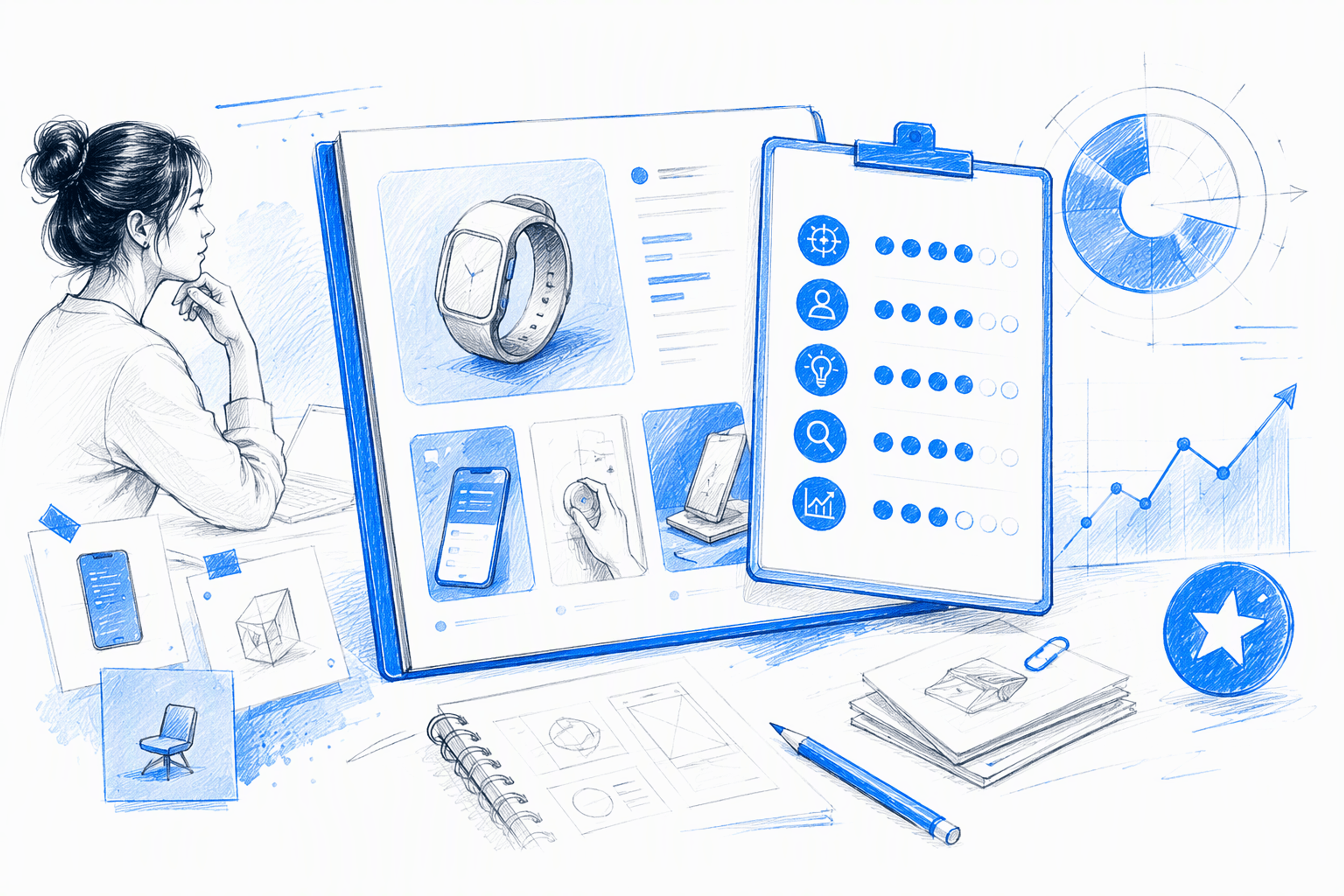
The best product design portfolios are not always the most experimental. We recommend judging them on seven evidence signals: positioning, project selection, decision quality, product craft, ownership, shipped proof, and outcomes. Strong portfolios communicate these signals quickly, then support them with credible case-study evidence.
Table of contents
- What the best product design portfolios prove in 2026
- The seven-point product design portfolio scorecard
- The 60-second test: what should be clear before opening a case study
- Read for consequential decisions, not a generic design-process timeline
- How to evaluate UX, UI, and frontend execution as one capability
- Separate personal ownership from team output
- Verify shipped proof and outcomes without metric theater
- AI is raising the bar for portfolio evidence, not replacing product designers
- Which portfolio deserves a closer look?
- FAQ
- Review UX, UI, and frontend work together
What the best product design portfolios prove in 2026
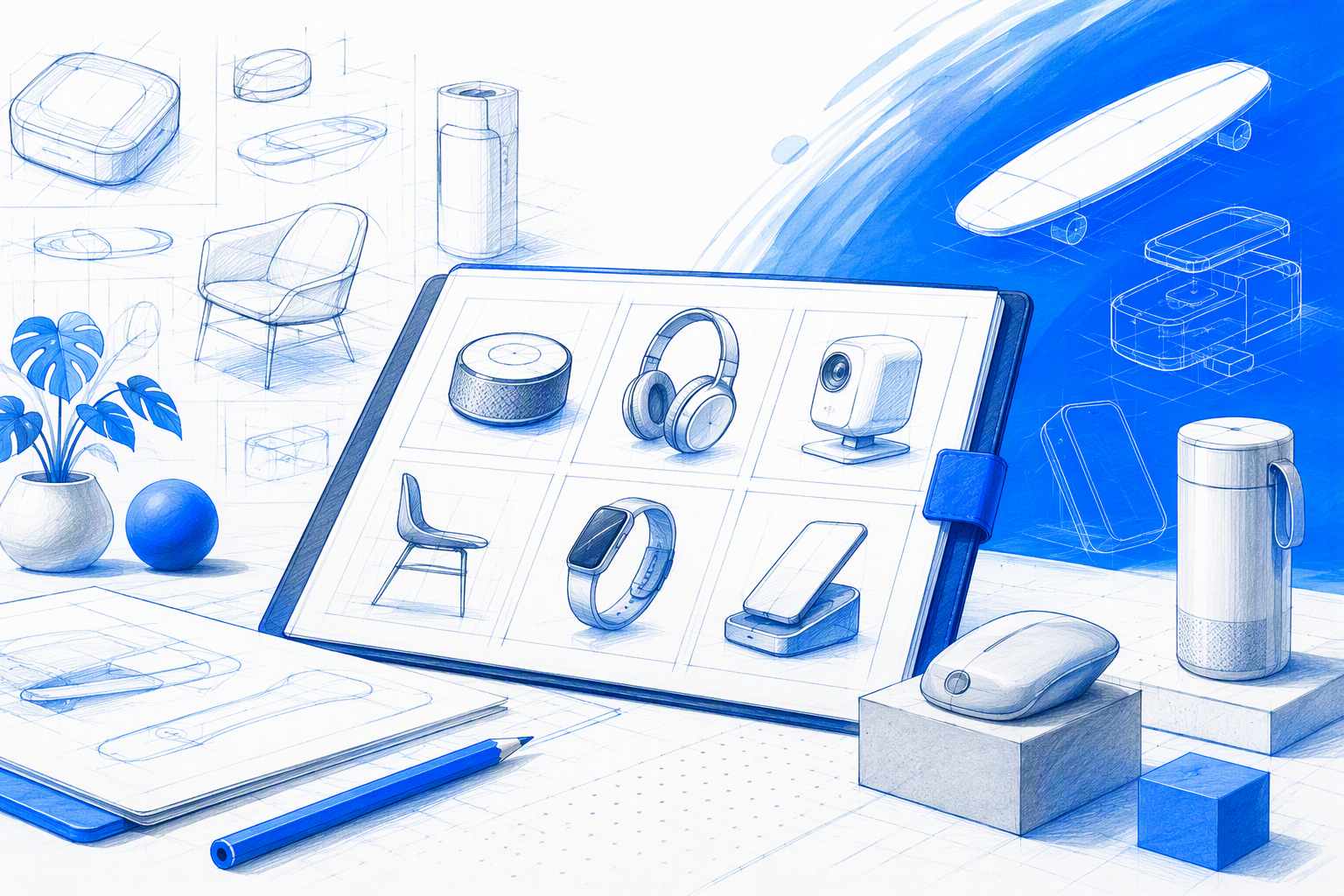
A striking product design portfolio is not automatically a strong one. Visual novelty may attract attention, but a useful evaluation depends on credible judgment, clear ownership, execution quality, and results.
For us, “best” means easy to understand and relevant to the role. We should quickly see what the designer does, which problems they solve, how they contributed, what reached users, and why the work mattered.
This is not a gallery of attractive websites or a case-study template. It is a framework for comparing product designer portfolio examples against a consistent evidence standard.
The scorecard covers seven signals:
- Positioning
- Project selection
- Decision quality
- Product craft
- Personal ownership
- Shipped proof
- Outcomes
Why visual novelty is not enough
Animation, expressive typography, polished mockups, and personal branding can create a memorable introduction. They cannot establish product judgment by themselves.
We treat them as supporting signals. The stronger proof lies in relevant decisions, coherent flows, production-aware details, and evidence that the work improved the product or clarified a user problem.
The seven-point product design portfolio scorecard
We rate each signal from 0 to 2:
- 0: Missing, vague, or unsupported
- 1: Present but incomplete
- 2: Clear, specific, and credibly evidenced
Across seven signals, the highest possible score is 14. This scorecard helps us compare visible evidence; it does not replace interviews, references, or collaborative exercises.
1–2: Positioning and project selection
First, assess whether the designer communicates a specific role, market, capability mix, and kind of value. “Designer who solves problems” reveals little. “Bangalore product designer combining UX, UI, and frontend execution” gives a hiring team something concrete to evaluate.
Next, review project selection. A few relevant, well-supported projects often provide more useful evidence than a large set of repetitive case studies.
The selection should show purposeful range rather than unrelated work. For another rapid framework, use our guide to portfolio examples that pass the 30-second hiring scan.
3–4: Decision quality and craft
Look beyond lists of activities. Strong case studies explain the constraint, alternatives considered, rejected directions, trade-offs, and resulting product change.
We also assess craft beyond static screens:
- Information architecture and flow logic
- Visual hierarchy and typography
- Component consistency
- Responsive behavior
- Interaction states and edge cases
- Accessibility considerations
- Feasibility and production awareness
5–7: Ownership, shipped proof, and outcomes
The portfolio should distinguish personal contribution from team delivery. “We redesigned the experience” is too broad unless the case study explains who led which decisions and deliverables.
We then look for production evidence: live work, coded interactions, implementation notes, release references, realistic states, or post-launch observations. Any outcome claim should include enough context to judge how it was measured and how design contributed.
The 60-second test: what should be clear before opening a case study
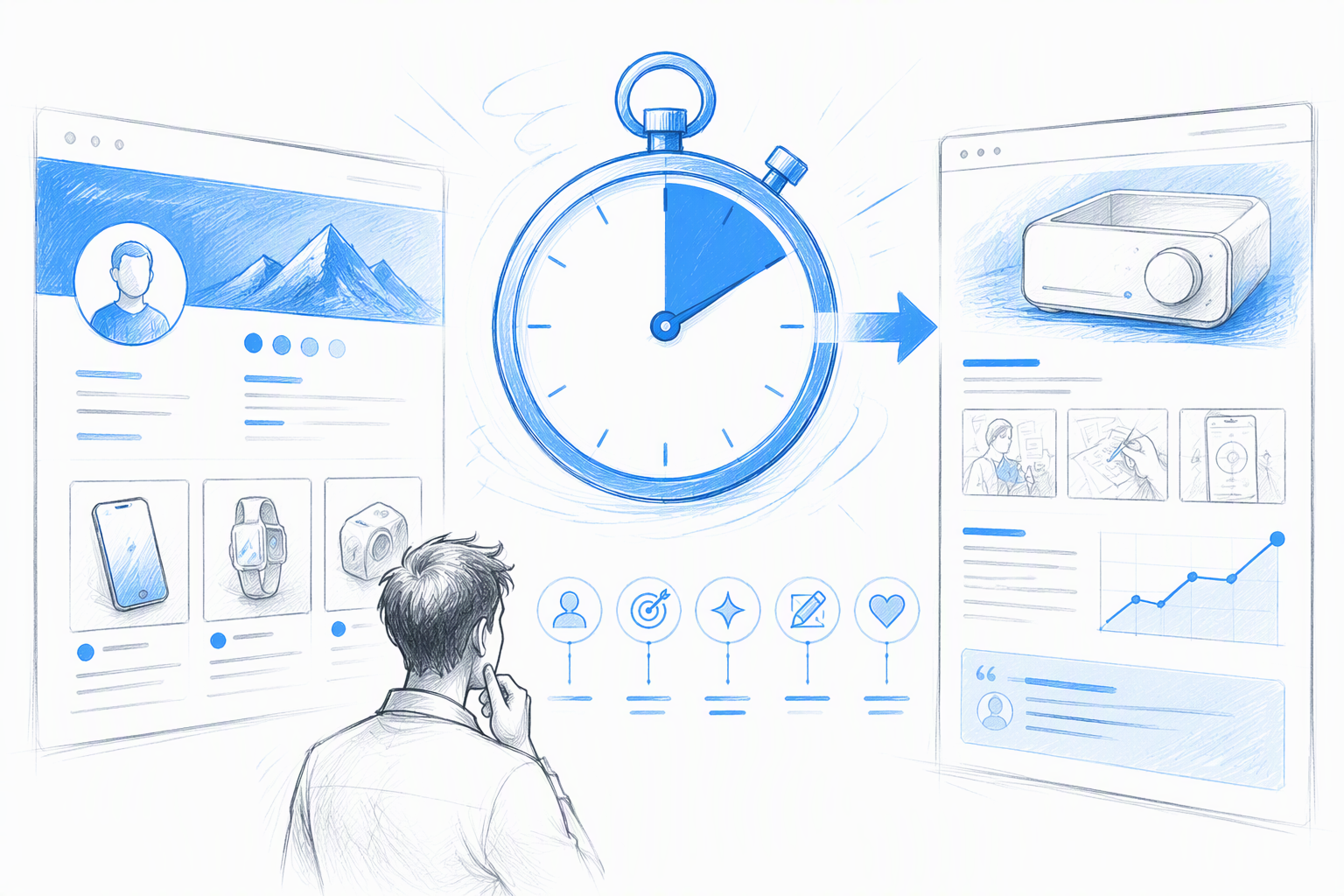
We use the 60-second test as a practical review exercise, not a universal hiring rule. During that first pass, we should be able to identify:
- The designer’s current role
- Their strongest capabilities
- Their location or availability
- The products or markets they understand
- The value they create
- Their most relevant work
Navigation should be obvious, pages should load efficiently, and experimentation should not undermine accessibility. Our practical product design portfolio sample review demonstrates how we examine these signals.
Above-the-fold signals
A focused opening statement should connect UX thinking, UI craft, and frontend execution when those are genuine strengths. Presenting them as a coherent capability is more persuasive than listing disconnected services.
Location or availability should also be easy to find when it affects the role. Reviewers should not need to search a résumé or contact page to establish basic fit.
Project thumbnails as decision aids
Compare “Blog redesign” with “B2B data platform blog: UX/UI lead improving content discovery.” The second description communicates product type, scope, role, and intended effect.
Decorative thumbnails make reviewers open every project to judge its relevance. Strong portfolios use project cards as compact decision aids, not mystery boxes.
Read for consequential decisions, not a generic design-process timeline
A research-to-wireframes-to-UI chronology does not automatically demonstrate strategic thinking. The differentiator is how those activities informed meaningful choices.
We look for decisions that changed the product: the constraint, competing options, rejected directions, and trade-offs behind the final approach. Before-and-after comparisons can help when they isolate changes to hierarchy, navigation, responsive behavior, or task clarity.
Evidence of UX judgment
Strong UX portfolios connect an insight to a decision and the decision to a product consequence. The reasoning should explain why the direction changed, not merely confirm that research occurred.
Journey maps, workshop photos, and interview quotes matter only when they clarify a meaningful choice. Otherwise, they document activity rather than judgment.
Signals of a process diary
Long tool lists, generic process diagrams, and exhaustive workshop recaps can bury the designer’s contribution. We prefer a shorter, defensible account. One difficult trade-off, explained clearly, may reveal more than several screens of standard process.
How to evaluate UX, UI, and frontend execution as one capability
Strong product work connects strategy with execution. We assess UX through architecture, flows, usability choices, and trade-offs. UI evidence includes hierarchy, typography, components, responsive states, and interactions.
Implementation awareness can appear through feasibility decisions, coded prototypes, developer collaboration, handoff details, or production refinements. When these layers align, the portfolio shows an end-to-end capability rather than three isolated skills.
Hevo Blog UI redesign: an evidence-led example
We evaluate the Hevo Blog UI redesign through content hierarchy, visual craft, and engagement thinking together. The key question is not simply whether it looks better, but whether the structure makes content easier to scan, navigate, and consume.
Before-and-after views, responsive screens, and design rationale make the intervention tangible. The amajaying Work and Portfolio Hub shows how we connect UX reasoning, polished UI, and implementation-aware execution.
What isolated mockups cannot prove
One polished screen cannot demonstrate component behavior, accessibility, responsive logic, edge cases, or production constraints. It may show visual taste, but not how the product works.
We look for connected screens and realistic states. Empty, error, loading, mobile, validation, and long-content states often reveal more practical craft than an idealized hero view.
Separate personal ownership from team output
Product design is collaborative, so ownership deserves separate evaluation. Credible portfolios distinguish among:
- I owned: Decisions and deliverables led by the designer
- I partnered on: Shared work with product, research, content, or engineering
- The team delivered: Collective implementation and results
We check whether the claimed scope is plausible for the role, timeline, and team structure. Giving collaborators proper credit usually strengthens credibility.
Questions the portfolio should answer
A hiring team should be able to determine:
- Which decisions did the designer lead?
- Which deliverables did they produce?
- Where did other disciplines contribute?
- What changed because of the designer’s work?
- Which compromises occurred during implementation?
These questions also help teams find a product designer who can actually ship, rather than one who presents collective output as individual work.
Verify shipped proof and outcomes without metric theater
We prioritize shipped links, implementation notes, working prototypes, production states, and post-launch learning. Speculative redesigns can reveal craft, but they offer less evidence of handling real constraints.
Quantitative claims need context: a baseline, timeframe, measurement method, and reasonable explanation of design’s contribution. A precise qualitative finding is more credible than an unsupported percentage.
A quick credibility check for impact claims
Ask:
- What changed?
- For which users?
- Over what period?
- Compared with what baseline?
The outcome should follow logically from the intervention. Be cautious when one designer receives sole credit for a result shaped by product, engineering, marketing, content, or market conditions.
What counts when exact numbers are confidential
Designers can still provide useful evidence through:
- Approved ranges or indexed values
- Directional movement
- Usability findings
- Support-ticket trends
- Stakeholder adoption
- Sanitized flows
- Clearly labelled qualitative feedback
They can also explain the measurement method without disclosing confidential values.
AI is raising the bar for portfolio evidence, not replacing product designers
AI can assist with ideation, editing, mockups, and portfolio assembly. It does not supply genuine ownership, accountable judgment, collaboration, or post-launch learning.
Because polished visuals and fluent copy are easier to produce, we place more value on defensible decisions, original artifacts, shipped work, implementation details, and candid lessons.
Can ChatGPT make a portfolio?
ChatGPT can structure, condense, and edit real project material. It cannot create legitimate research, decisions, ownership, or outcomes that never happened.
AI-assisted copy should remain specific and defensible. If a designer cannot explain the alternatives, trade-offs, or implementation changes, polished language adds little credibility.
Authenticity signals for 2026
We look for constraint-specific reasoning, imperfect trade-offs, original working artifacts, clear collaboration boundaries, and lessons learned after launch.
Claims should also align with the live product, résumé, role scope, and interview answers.
Which portfolio deserves a closer look?
There is no useful universal ranking without a role, product context, and evaluation standard. Employer logos and gallery popularity may create interest, but they do not establish fit.
We recommend using the scorecard to compare portfolios against the capabilities a team needs. A focused personal website with clear evidence is often more useful than a gallery profile built mainly for visual browsing.
Teams seeking connected UX, UI, and frontend capability can review our product designer and fullstack creative portfolio. Designers restructuring their work can use our guide to building product design case studies hiring teams trust.
Who are some of the best product designers to review in 2026?
The strongest candidates are those whose evidence fits the role. We compare judgment, ownership, craft, implementation awareness, and outcomes rather than relying on high-profile employers.
A portfolio from Apple, Google, or Meta may still leave important questions unanswered. A lesser-known designer may explain their work far more clearly.
What is the best design portfolio site?
The best site makes positioning, relevant work, ownership, and shipped impact easy to verify. It should load efficiently, support accessible navigation, and help reviewers find evidence without opening every page.
We generally prefer a focused personal site over a visually driven gallery profile.
FAQ
Who has the best product design portfolio?
There is no single best portfolio for every role. We recommend comparing positioning, project relevance, decisions, craft, ownership, shipped proof, and outcomes against the team’s actual needs.
Is AI replacing product designers?
AI can accelerate synthesis, ideation, interface exploration, copy, and documentation. Product designers remain accountable for context, trade-offs, collaboration, feasibility, user needs, and production outcomes.
What is the best platform for a design portfolio?
The platform matters less than the evidence. A good portfolio should be fast, accessible, responsive, easy to navigate, and capable of presenting clear case studies.
Can ChatGPT make a portfolio?
ChatGPT can organize material, create outlines, and edit repetitive copy. It should not be used to invent research, ownership, product decisions, metrics, or outcomes.
How many projects should a product design portfolio include?
There is no fixed requirement. We recommend a focused selection that demonstrates relevance, range, and credible evidence without repeating the same process or capability.
Review UX, UI, and frontend work together
Explore our product designer and fullstack creative portfolio to see how we connect UX thinking, interface craft, and frontend awareness—then contact us to discuss your product design needs.