Best product designer portfolios: a practical hiring guide for 2026
Learn how to assess product designer portfolios for relevance, ownership, judgment, execution, and impact with a 90-second scorecard. Start hiring smarter.
By Ajay Khatri ·

TL;DR
The best product designer portfolios make relevance, ownership, judgment, execution, and credible impact easy to verify. Strong visuals attract attention, but hiring teams also need evidence of sound product decisions. Our scorecard helps reviewers assess the work consistently before investigating the details in an interview.
Table of Contents
- What the best product designer portfolios prove in 2026
- A fast product designer portfolio review
- A scorecard for comparing the best product design portfolios
- How expectations change by career level
- How to evaluate a hybrid UX, UI, and frontend portfolio
- Credible impact without inflated portfolio metrics
- Worked review: assessing Hevo Blog UI as product work
- Portfolio red flags—and where designers should go next
- FAQ
- Review impact-driven product design work
What the best product designer portfolios prove in 2026
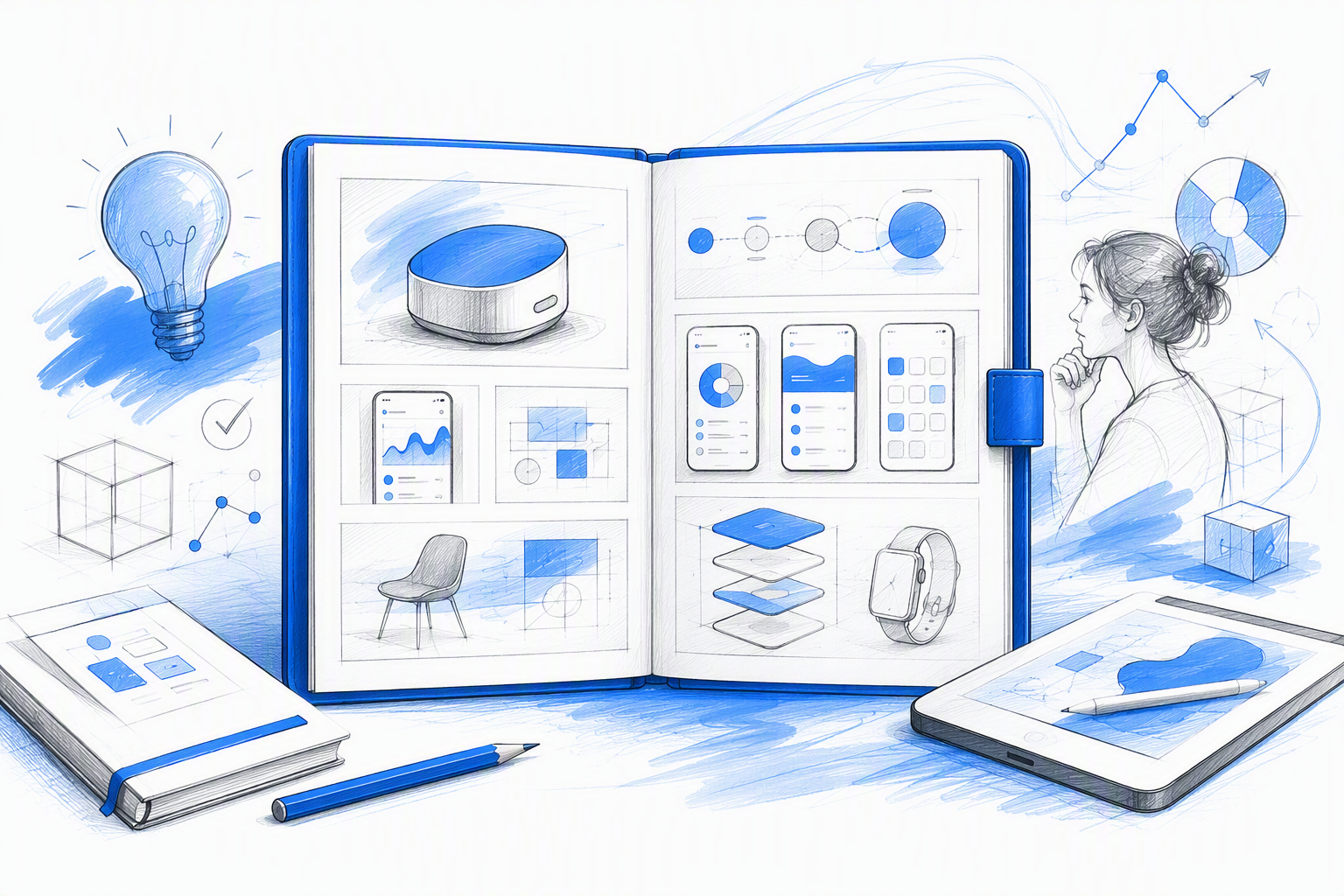
A beautiful portfolio is not automatically a strong product design portfolio. If it cannot explain what changed, why it changed, and what the designer owned, the presentation is carrying too much weight.
We define “best” through hiring usefulness: clear relevance, credible ownership, strong decisions, coherent craft, execution, and honest evidence. This framework works across UX, UI, product strategy, and frontend-heavy roles, although the weighting should reflect the role.
Our guide to what hiring teams should look for in a product designer portfolio explains why we assess thinking and execution together.
Why inspiration galleries are a weak hiring tool
Galleries such as Bestfolios and curated collections of work from designers at companies including Apple, Google, and Meta can support visual research. They are less useful for candidate assessment because thumbnails strip away constraints, collaboration, ownership, and impact.
Popularity may reflect personal branding, employer recognition, or presentation quality rather than suitability for a particular B2B platform, consumer product, design system, or implementation-heavy role.
Why “best product designer portfolios Reddit” results need context
Community recommendations can surface distinctive work that conventional galleries miss. Upvotes and comments, however, do not confirm who made the decisions, whether the work shipped, or how an outcome was measured.
We recommend using community examples for discovery, then applying the same relevance, ownership, decision, execution, and evidence checks used for every candidate.
A fast product designer portfolio review
A first pass should answer six practical questions:
- Is the work relevant to the role?
- What was the designer’s role?
- What scope did they own?
- Which consequential decision can we inspect?
- Is there evidence of execution?
- What is the strongest credible outcome signal?
A concise project summary should establish fit before deeper sections reveal research, alternatives, trade-offs, implementation, and results. Long case studies are not inherently rigorous. Our collection of portfolio examples that pass the 30-second hiring scan demonstrates how concise evidence can establish context without flattening the project story.
We also assess website polish separately from the underlying product work. A refined site may demonstrate visual and frontend craft, but it cannot compensate for vague ownership or missing decisions.
The first-screen relevance check
The opening screen should communicate the designer’s positioning, experience, product background, and strongest capabilities. Reviewers should be able to distinguish between enterprise UX, consumer product work, UI systems, and frontend delivery without decoding an abstract introduction.
Navigation should expose relevant projects quickly. Experimental interactions help only when they preserve orientation, accessibility, and access to the work.
The project-card credibility check
A useful project card or summary identifies:
- Product and problem context
- The designer’s individual role
- Important constraints
- Whether the work shipped
- An outcome or validation signal, where available
Generic statements such as “we transformed the experience” reveal little. We look for what the designer decided, influenced, executed, or validated.
A scorecard for comparing the best product design portfolios
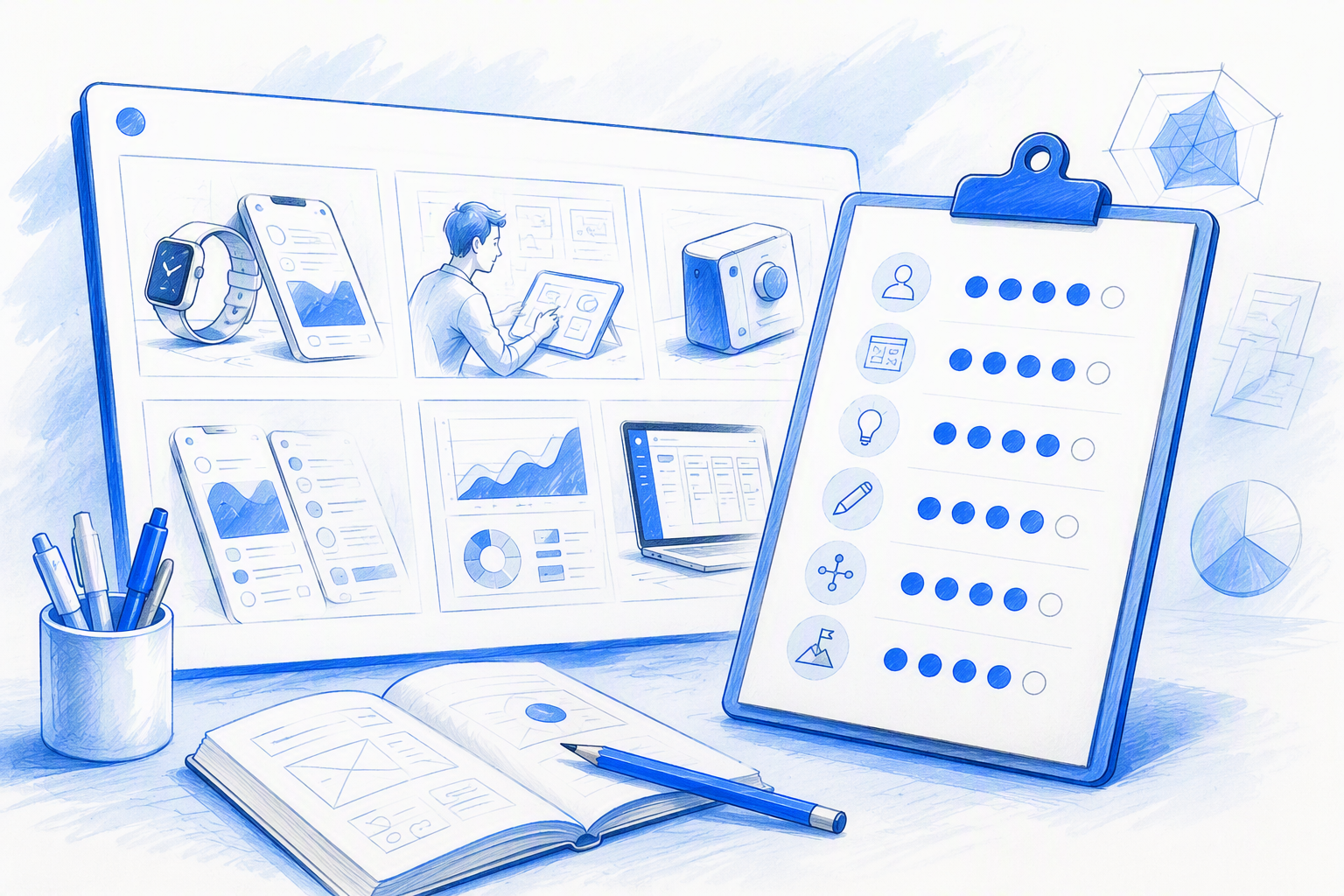
Subjective favourites create inconsistent shortlists. We recommend rating each portfolio as low, medium, or high across six dimensions. Our seven signals that prove portfolio hireability offer further interpretation.
The scorecard supports shortlisting; it does not replace an interview. Reviewers should record uncertainties and investigate them later.
1. Relevance and positioning
Does the work match the product, users, company stage, and immediate design needs? Adjacent experience can be valuable when the portfolio explains which capabilities transfer.
2. Individual ownership
Can we separate the designer’s contribution from the team’s work? Strong case studies identify decisions, deliverables, collaboration boundaries, and areas of influence.
3. Decision quality
Look for consequential choices, alternatives, constraints, and trade-offs. One clearly explained compromise between user needs, technical limitations, and business priorities tells us more than a generic process diagram.
4. UX and UI craft
Flows, hierarchy, interactions, visual systems, and details should reinforce one another. Attractive screens with confusing behaviour are not strong product craft. Neither are sensible flows presented through inconsistent interfaces.
5. Execution evidence
Useful evidence includes shipped interfaces, working prototypes, live behaviour, design-system contributions, implementation artefacts, and clear engineering collaboration. These product design examples that prove hireability connect decisions with tangible delivery.
6. Outcomes and credibility
Claims should be specific, proportionate, and supported. Strong evidence explains what changed and how it was observed without crediting one design decision for a complex team result.
How expectations change by career level
We assess portfolios against the scope, ambiguity, influence, and execution expected for the role. The question is not simply whether a portfolio looks impressive, but whether its evidence supports the responsibilities involved.
University and junior product design portfolios
For junior candidates, we place more weight on learning, foundational thinking, craft potential, and honest context. The portfolio should show how the designer framed the problem, used feedback, and improved the work.
Transparent usability findings are more credible than unsupported predictions about future revenue or adoption.
Senior product designer portfolios
Senior portfolios should demonstrate end-to-end ownership, difficult trade-offs, cross-functional execution, systems thinking, and meaningful product contribution. Strong final UI should be supported by mature judgment.
We also examine how the designer handled ambiguity, aligned partners, changed direction, and maintained quality through delivery.
Staff product designer portfolios
Staff-level evidence should extend beyond screen delivery. Look for strategic direction, influence across teams, scalable systems, and improvements to product decision-making.
Staff designers need not claim sole ownership of organisation-wide outcomes. Their contribution may appear through alignment, frameworks, systems, and better decisions across several teams.
How to evaluate a hybrid UX, UI, and frontend portfolio
Hybrid range can be a genuine advantage when UX thinking, visual craft, and frontend execution form one coherent product story. At amajaying.com, we see these capabilities as connected parts of delivery rather than isolated disciplines.
Implementation skill adds value when it improves the product. Technical spectacle that delays navigation or obscures the case study shows weak prioritisation, regardless of how impressive it looks.
Signals of connected product craft
Strong hybrid portfolios show that:
- The interaction model supports the user flow
- Visual systems remain consistent across responsive layouts
- Accessibility informs hierarchy, contrast, states, and behaviour
- Implementation preserves or improves the design intent
- Design and frontend decisions respond to shared constraints
The result should feel like one process, not separate UX, UI, and code showcases.
When custom code adds hiring value
Custom code is useful when it demonstrates responsive behaviour, accessibility, performance awareness, interaction quality, or production understanding. It loses value when basic navigation becomes harder or the portfolio overshadows the product work.
A credible portfolio does not need to be custom-coded.
Credible impact without inflated portfolio metrics
Not every strong project includes revenue, conversion, or perfect before-and-after measurement. We distinguish honest evidence from unsupported success claims rather than rewarding the largest number.
Results often depend on design, engineering, product, marketing, timing, and market conditions. Acknowledging those limits increases credibility. Our guide to building case studies hiring teams trust explains how to connect evidence with ownership without exaggeration.
Strong outcome evidence
Credible signals may include:
- Shipped product improvements
- Adoption or engagement patterns
- Usability findings
- Task-performance changes
- Support trends
- Customer or stakeholder evidence
- Validated decisions and reduced delivery risk
A portfolio should explain what was measured, when it was measured, and what else may have influenced the result.
Weak or misleading evidence
Treat precise percentages cautiously when they lack a baseline, source, timeframe, or attribution method. Claims are also weak when they assign a team-wide business result to one interface change.
We recommend asking what the designer can support directly and what remains an interpretation.
Worked review: assessing Hevo Blog UI as product work
A Hevo Blog UI redesign provides a useful review exercise because content discovery, hierarchy, readability, and engagement are product concerns. The assessment should connect the stated problem with the delivered interface without inventing results or confidential context.
Information architecture, UI craft, responsive behaviour, and frontend quality can reinforce one coherent story. This annotated digital case-study sample helps separate visible evidence from questions that require discussion.
What a hiring manager can verify quickly
Public work can make several qualities inspectable:
- Content hierarchy and readability
- Navigation and discovery logic
- Responsive layout behaviour
- Interaction consistency
- Visible accessibility cues
- Visual-system coherence
- Alignment between the stated problem and final interface
These observations support an assessment of craft. They do not independently prove business impact or ownership.
What still requires a conversation
An interview should clarify the designer’s role, collaboration model, constraints, implementation depth, and contribution to outcomes. We ask which decisions they led, influenced, validated, or executed directly.
Confidential analytics may be unavailable publicly. Responsible omission is better than exposing sensitive information for effect.
Portfolio red flags—and where designers should go next
Common red flags include:
- Unclear individual ownership
- Final UI without reasoning
- Generic process theatre
- One template imposed on every project
- Unsupported metrics
- Broken mobile behaviour
- Inaccessible interactions
- Confidential details exposed for visual impact
Our core check is simple: can we identify fit, ownership, a meaningful decision, execution quality, and credible evidence without an exhaustive read?
The guide to 11 things hiring managers need to see provides a practical checklist. Our article on a good product design portfolio with decision-dense case studies also explains why consequential choices matter more than exhaustive process documentation.
For designers improving their case studies
Designers turning these criteria into stronger narratives can use our guide to product design portfolios and evidence hiring teams trust. It covers narrative structure, ownership writing, process selection, and documentation.
The goal is not to make every case study longer. It is to make every section useful.
For hiring managers creating a shortlist
Apply the scorecard consistently, record uncertainties, and reserve interview time for trade-offs, collaboration, execution, and attribution.
NDA-protected work should not be rejected automatically. Instead, assess whether the designer communicates scope, judgment, and learning without disclosing sensitive information. Our design portfolio shows how UX, UI, and frontend capabilities can connect within one body of work.
FAQ
What makes the best product designer portfolios stand out?
They make fit, ownership, decisions, execution, and outcomes easy to verify. Visual polish strengthens the story but does not replace context or evidence.
How long should an initial portfolio review take?
There is no universal limit. The first pass should be brief enough for consistent shortlisting while still identifying positioning, relevant work, ownership, execution, and a credible outcome signal.
Does every portfolio need measurable business impact?
No. Shipped improvements, usability findings, task changes, support trends, customer evidence, and validated decisions can all be useful when their context and limits are clear.
Should a product designer portfolio be custom-coded?
No. Custom code helps when it demonstrates implementation skill, accessibility, responsive behaviour, or interaction quality. Established portfolio tools are equally valid when they present the work clearly.
How should reviewers assess a senior product designer portfolio?
We recommend looking for end-to-end ownership, consequential trade-offs, cross-functional delivery, systems thinking, and meaningful contribution. Individual influence should remain distinct from results produced by the wider team.
Review impact-driven product design work
Need a designer who can connect UX thinking, distinctive UI craft, and frontend execution? Explore our design portfolio and start a conversation about your product.