UIUX design services: 10 services and a practical buyer’s checklist
Explore 10 UIUX design services, learn which support your product needs, and use a practical checklist to choose a partner who can help ship. Read the guide.
By Ajay Khatri ·
TL;DR
The best uiux design services address a defined product problem instead of forcing every client through the same process. We recommend identifying the UX, UI, validation, system, and frontend support the product needs, then assessing whether a provider can turn attractive concepts into an experience that can be tested, built, and improved.
Table of Contents
- What uiux design services should include: a buyer’s checklist
- UX, UI, product design, or frontend: which combination are you hiring for?
- What should each UI/UX engagement actually deliver?
- How to evaluate a UI/UX designer beyond polished screens
- What determines UI/UX design cost and timeline?
- Will AI replace UI/UX designers in 2026?
- Independent hybrid designer or global UI/UX agency?
- How to define the next step
- FAQ
- Create an engagement built around the real problem
What uiux design services should include: a buyer’s checklist
Sometimes a team hires a designer to improve its product and receives little more than a cleaner version of the same confusing experience. That happens when UI/UX design services are scoped around screen production rather than product decisions.
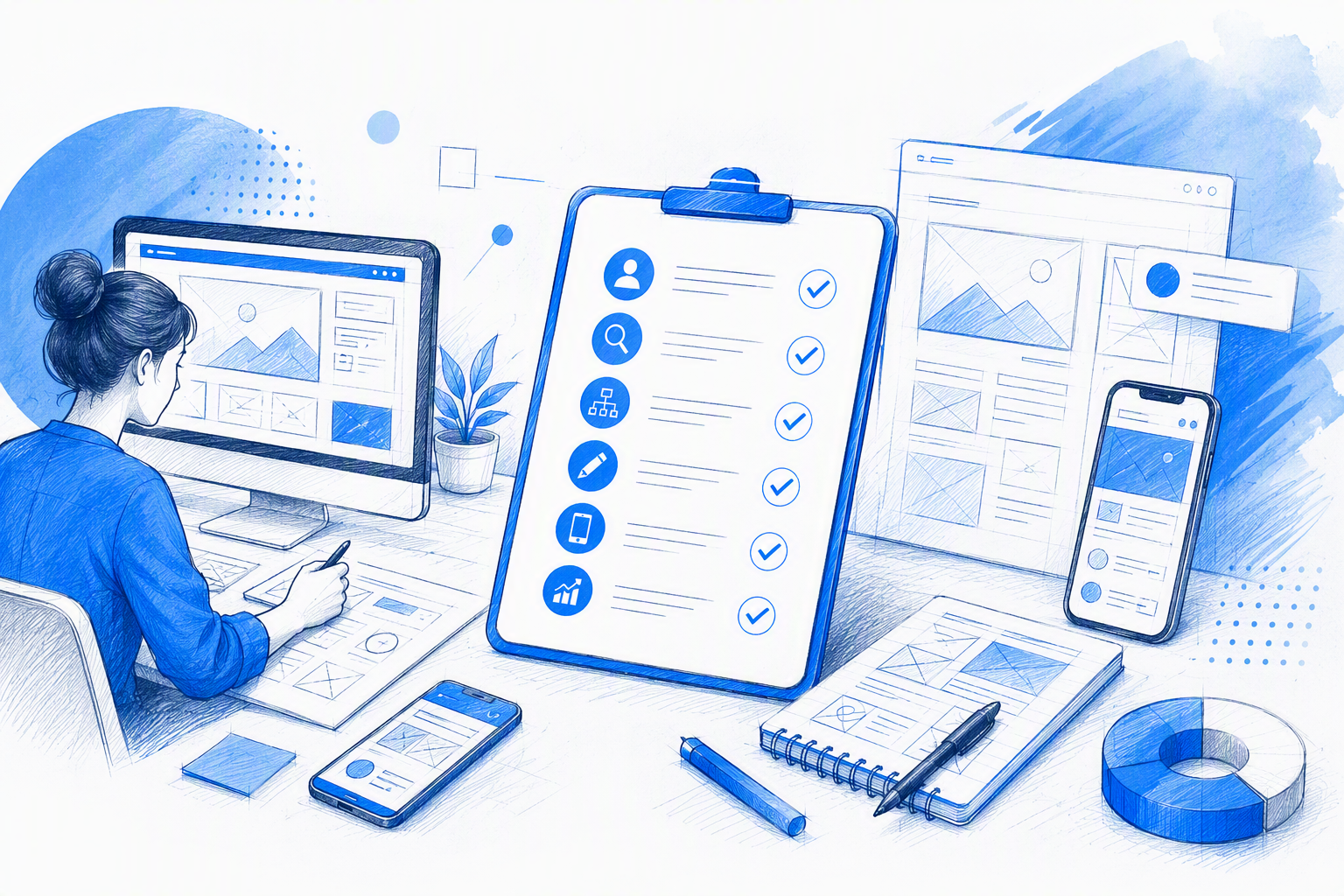
The right scope depends on the problem, the available evidence, and what the team can realistically implement. We treat the following services as selectable tools, not a mandatory sequence.
The 10 core UI/UX services
UX audit: Identifies where the existing experience creates friction. Deliverables should include prioritized findings, supporting evidence, severity, and recommended action.
User-flow mapping: Defines how people complete important tasks, including primary routes, decisions, alternate paths, failures, and recovery steps.
Information architecture: Organizes content, features, and navigation so people can find what they need.
Wireframing: Tests hierarchy and functionality before visual polish. It should cover critical screens, states, and responsive changes.
Interaction design: Defines feedback, transitions, validation, permissions, errors, loading behaviour, and state changes.
Visual UI design: Establishes hierarchy, consistency, and brand character through responsive layouts, typography, colour, spacing, imagery, and interface states.
Prototyping: Makes important interactions testable before development, particularly where assumptions or product risks remain.
Usability testing: Checks whether intended users can understand and operate the proposed experience through realistic tasks.
Component foundations or design systems: Creates reusable components, variants, tokens, and usage rules suited to the product’s maturity.
Frontend collaboration: protects design intent during implementation through behaviour notes, responsive rules, assets, technical discussion, and build reviews.
Services a product may not need yet
More research is not automatically better. If analytics reveal a problem, support tickets explain it, and observed sessions confirm it, another broad discovery exercise may add little value.
Likewise, a young product with a small set of recurring patterns may need reusable components and basic tokens rather than an enterprise-scale design system. Our approach is to fund the decisions that matter now while leaving room to scale.
For another practical scope breakdown, see this buyer’s guide to build-ready product design.
UX, UI, product design, or frontend: which combination are you hiring for?
UX design covers problem framing, evidence, structure, flows, interaction logic, and validation. UI design covers visual hierarchy, responsive composition, interface states, craft, and brand expression.
Product design usually takes broader ownership across user needs, business priorities, requirements, and trade-offs. Frontend involvement is a separate choice: a designer may advise developers, review builds, or contribute code.
| Product condition | Support to prioritize |
|---|---|
| Problem or requirements are unclear | Product strategy and UX |
| Users struggle with critical tasks | UX audit, flows, and testing |
| Product works but looks generic | Interaction and visual UI |
| Designs lose fidelity in development | Frontend collaboration |
| Several problems overlap | Hybrid product, UI/UX, and frontend support |
Choose UX services when the experience is unclear
We prioritize evidence review, task flows, information architecture, wireframes, and validation when people cannot understand a product or complete its central task.
Investing in a visual redesign before resolving structural friction usually creates avoidable rework. Polishing the wrong flow does not fix it.
Choose combined UI/UX support when the product feels forgettable
Combined support suits a viable product whose interactions feel awkward, inconsistent, or visually interchangeable with competitors. The aim is clarity paired with a distinctive creative direction.
Effective UI/UX designing services go beyond pretty screens by connecting visual choices to product behaviour.
Add frontend continuity when launch fidelity matters
The scope should state whether the designer will provide implementation guidance, inspect builds, resolve responsive exceptions, or write frontend code. “Developer-ready” is too vague without named responsibilities.
Our approach to UX/UI design services that connect product thinking to frontend reality explains this relationship in more detail.
What should each UI/UX engagement actually deliver?
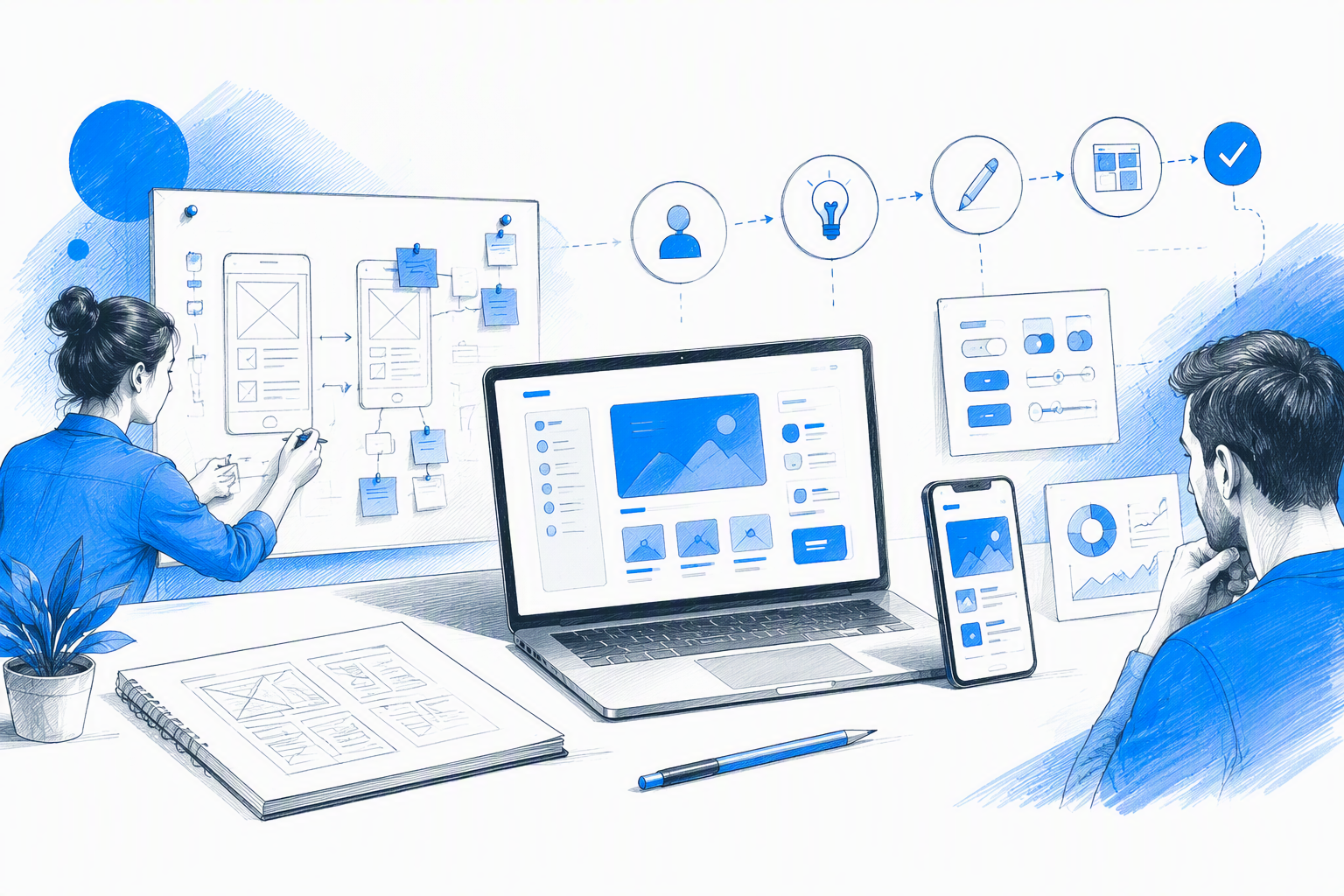
Service labels are easy to sell. Inspectable deliverables and acceptance criteria reveal what the client is buying.
A SaaS onboarding engagement might include funnel evidence, support-ticket themes, revised flows, wireframes, usability findings, responsive UI, and build notes. It may not require months of research or a complete rebrand.
Deliverables for discovery and UX decisions
Discovery and UX work may provide:
- Prioritized audit findings tied to evidence and severity
- A summary separating known facts from assumptions
- Journey maps or task flows, including failure and recovery routes
- Information architecture and wireframes
- A decision log explaining major trade-offs
We do not treat an audit as a gallery of subjective opinions. Each recommendation needs enough context for stakeholders to understand what should change and why.
Deliverables for visual UI and interaction design
UI work should include responsive layouts and realistic states, not only ideal desktop screens. That may mean loading, empty, error, permission, success, long-content, and disabled states.
Prototypes need clear objectives and credible tasks. The visual direction should make the product recognizable without weakening hierarchy, readability, accessibility, or task completion.
Deliverables for implementation handoff
Depending on the engagement, handoff may include reusable components, variants, tokens, assets, responsive rules, behaviour notes, and build-review expectations. Documentation depth should match the product and development team.
Our guide to UI/UX design services that survive frontend execution covers what build-ready delivery should protect.
How to evaluate a UI/UX designer beyond polished screens
Portfolio platforms make visual discovery easy, but attractive thumbnails do not prove product reasoning. We look for evidence, ownership, constraints, realistic states, implementation thinking, and credible results.
Concepts should be separated from shipped work. Ask what changed during development and how any reported outcome was measured.
Five questions to ask about every case study
- What problem was being solved, and for whom?
- Which decisions did the designer own?
- What business, user, or technical constraints shaped the solution?
- Did the work cover realistic states and responsive behaviour?
- What shipped, and what happened afterward?
For a checkout redesign, for example, we would inspect mobile behaviour, validation, errors, empty states, technical constraints, and evidence related to the core action. One polished desktop screen is not enough.
Use these product designer portfolio criteria to keep reviews consistent.
Portfolio warning signs
Watch for case studies where:
- Only idealized hero screens appear
- Flows, states, constraints, or evidence are absent
- Impact is claimed without explaining measurement
- The designer’s ownership remains unclear
- Every product receives the same fashionable style
- Concepts and shipped work are not distinguished
Visual character matters, but it cannot replace usability or judgment. Strong UI/UX work makes both the reasoning and the craft visible.
What determines UI/UX design cost and timeline?
There is no useful universal price for UI/UX work. A focused audit, a critical-flow redesign, and a multi-role SaaS engagement involve different levels of uncertainty, output, and implementation support.
Stakeholder availability also matters. Delayed access to evidence, conflicting feedback, and slow decisions can extend an otherwise focused engagement.
The six biggest cost drivers
- Product complexity and the number of critical flows
- Research and validation depth
- Responsive, browser, and device coverage
- The number of states and level of interaction detail
- Existing component or design-system maturity
- Expected frontend collaboration and build support
Accessibility requirements, stakeholder count, technical constraints, and evidence quality may also affect scope. A credible estimate should state its assumptions instead of hiding them behind a screen count.
A better way to compare proposals
Hourly rates offer limited insight on their own. One provider may produce screens, while another clarifies requirements, owns critical flows, defines responsive behaviour, and reviews implementation.
We recommend comparing:
- Decisions and outcomes owned
- Evidence gathering and validation
- Edge-case and responsive coverage
- Reusable foundations
- Revision logic
- Implementation involvement
- Explicit exclusions
If the engagement models remain unclear, compare freelance, full-time, and agency product design hiring before focusing on rates.
Will AI replace UI/UX designers in 2026?
AI can reduce the time required for routine design production, but it does not remove the need for product judgment. Generated interfaces become useful when people still direct the priorities, creative choices, validation, and execution.
What AI can accelerate
AI tools can assist with:
- Early visual exploration
- Repetitive interface variants
- Draft content and microcopy
- Pattern identification
- Prototype production
- Initial documentation
Speed is only useful when the team understands the problem and intended outcome. Producing the wrong interface faster is still producing the wrong interface.
What clients still need a designer to own
Designers remain responsible for framing problems, interpreting incomplete evidence, challenging weak requirements, choosing trade-offs, covering edge cases, aligning stakeholders, and recommending what should ship.
We also recommend asking how AI output is reviewed and how sensitive customer or product information is handled. The strongest providers combine UX reasoning, visual craft, commercial awareness, and implementation literacy.
Independent hybrid designer or global UI/UX agency?
Large, multi-market programs may require agency-scale staffing. Focused products can benefit from direct collaboration when UX, UI, product, and frontend decisions need to remain connected.
At amajaying.com, our clients work directly with the person doing the product thinking and design work. This model supports continuity from the original problem through visual direction and implementation discussion.
When an independent designer is the better fit
An independent hybrid partner may suit a project when:
- A founder or product team can own key decisions
- Senior hands-on work matters
- Direct feedback is more valuable than rapid staffing
- UX, UI, and implementation choices must stay connected
- The scope needs constructive challenge, not passive execution
Time-zone overlap, collaboration rhythm, ownership, and senior attention often reveal more than geography alone. Our overview of freelance product design workflows shows how focused ownership can move from a product problem toward a shipped experience.
Questions to ask any provider before hiring
We suggest asking every independent designer, UI/UX company, or agency:
- Who performs the work day to day?
- How are weak requirements challenged?
- How are decisions and trade-offs documented?
- Who owns responsive states and technical constraints?
- What happens when evidence challenges the requested solution?
- How are implementation changes handled?
These questions expose how a provider operates. Our guide to hiring a contract product designer offers a deeper evaluation framework.
How to define the next step
A useful engagement begins with the product decision that needs to improve. Before contacting a provider, we recommend summarizing the current problem, available evidence, affected users, technical constraints, internal decision-makers, and desired implementation support.
Define the required service mix
Separate essential services from optional ones. A product may need an audit and revised flows before visual design, while another may already have sound UX and need stronger interaction design, UI, and frontend continuity.
Set expectations around ownership
Clarify who will gather evidence, approve decisions, produce responsive states, support developers, and review the build. This prevents gaps between a polished design file and the released product.
Review Amajaying’s UI/UX offer and selected work to see how we connect these responsibilities.
FAQ
What is the difference between UX and UI design services?
UX services address structure, task flows, interaction logic, and validation. UI services shape visual hierarchy, responsive layouts, interface states, and brand expression. Many products need both, but structural problems should generally be resolved before heavy visual polish.
What should a UI/UX design proposal include?
A useful proposal defines the problem, scope, activities, deliverables, assumptions, stakeholder responsibilities, revision logic, and implementation involvement. It should also state exclusions rather than promising an arbitrary number of screens.
How much does a UX/UI designer cost?
Cost varies with product complexity, research depth, responsive coverage, interface states, system maturity, and implementation support. We recommend comparing deliverables, ownership, assumptions, and exclusions rather than using the hourly rate alone.
How long does a UI/UX engagement take?
Timelines depend on uncertainty, feedback speed, research access, flow complexity, and implementation responsibilities. A focused audit differs substantially from redesigning several roles and workflows. Milestones tied to decisions and deliverables are more informative than screen-production estimates.
Should a startup invest in a complete design system?
Not necessarily. An early product may gain more from reusable core components, basic tokens, and clear usage rules. Broader documentation becomes more valuable as the interface, team, and consistency requirements grow.
Should a UI/UX designer know frontend development?
Not every designer needs to write production code, but implementation literacy helps. Designers should understand responsive behaviour, components, accessibility, browser constraints, and edge cases. If launch fidelity matters, define whether they will advise developers, review builds, or contribute code.
Create an engagement built around the real problem
Ready to connect product thinking, distinctive UI, and frontend-aware delivery? See how I combine UX thinking, scroll-stopping UI, and frontend awareness to create experiences built to make an impact.