Freelance industrial designer or product designer: who should you hire?
Compare the skills of a freelance industrial designer and product designer, understand who fits your project, and hire the right specialist with confidence.
By Ajay Khatri ·
TL;DR
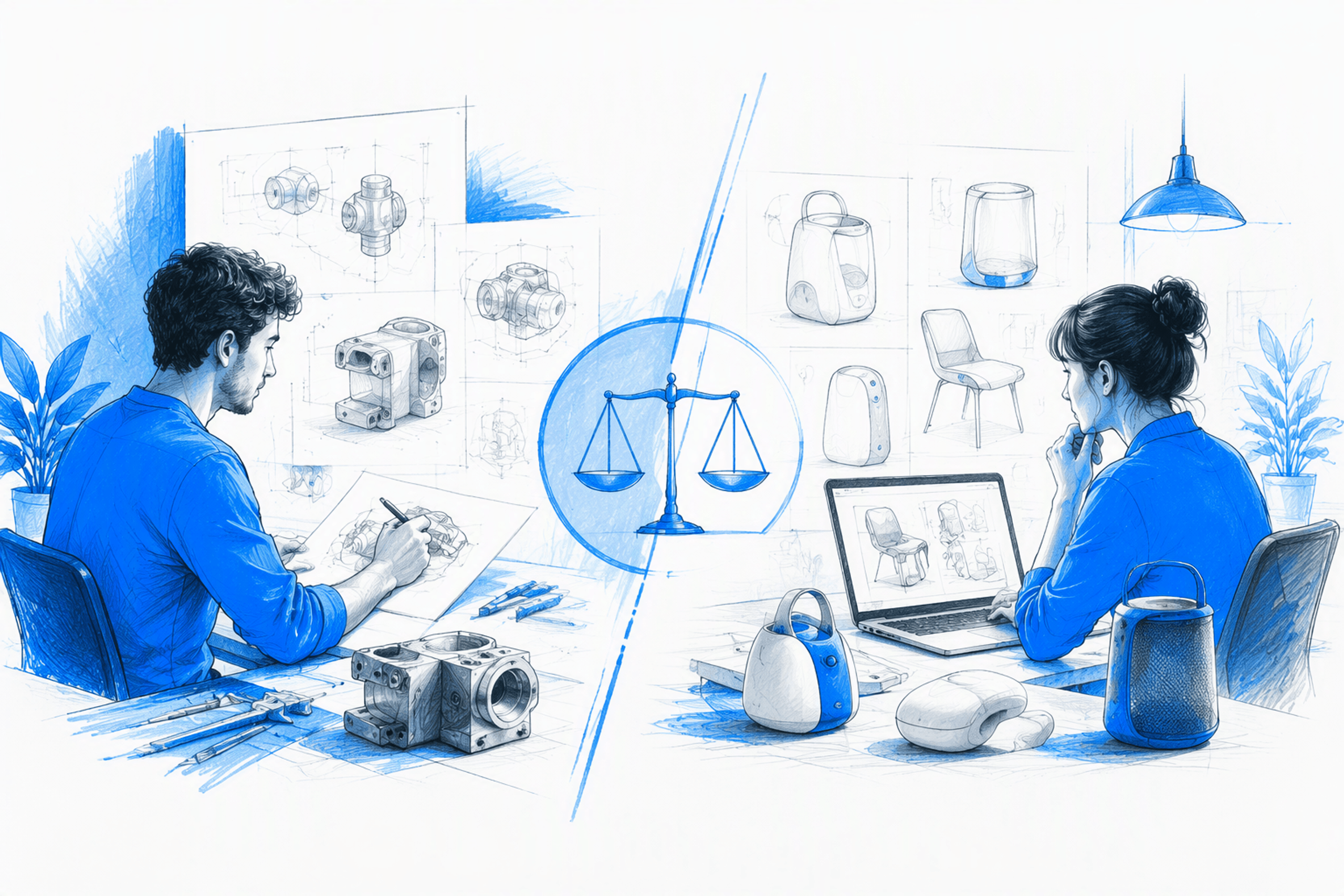
If a product will be manufactured, hire a freelance industrial designer with experience in physical form, CAD, materials, prototyping, and production. If it lives on a screen, hire a freelance product designer who can connect user journeys, interface design, responsive behaviour, and engineering execution. We design digital experiences for websites, apps, SaaS products, and platforms—not manufactured objects.
Table of Contents
- Freelance industrial designer or freelance product designer: which one do you need?
- What I own as a freelance product designer
- Seven things to check before hiring a product designer freelance
- How to evaluate a freelance product designer’s case studies
- When one hybrid UX, UI, and frontend designer is the efficient choice
- Engagement models and deliverables
- Freelance product designer vs freelance content designer
- Questions to ask before starting a freelance design engagement
- Work with a Bangalore-based freelance product designer
- FAQ
- Bring us the rough brief
Freelance industrial designer or freelance product designer: which one do you need?
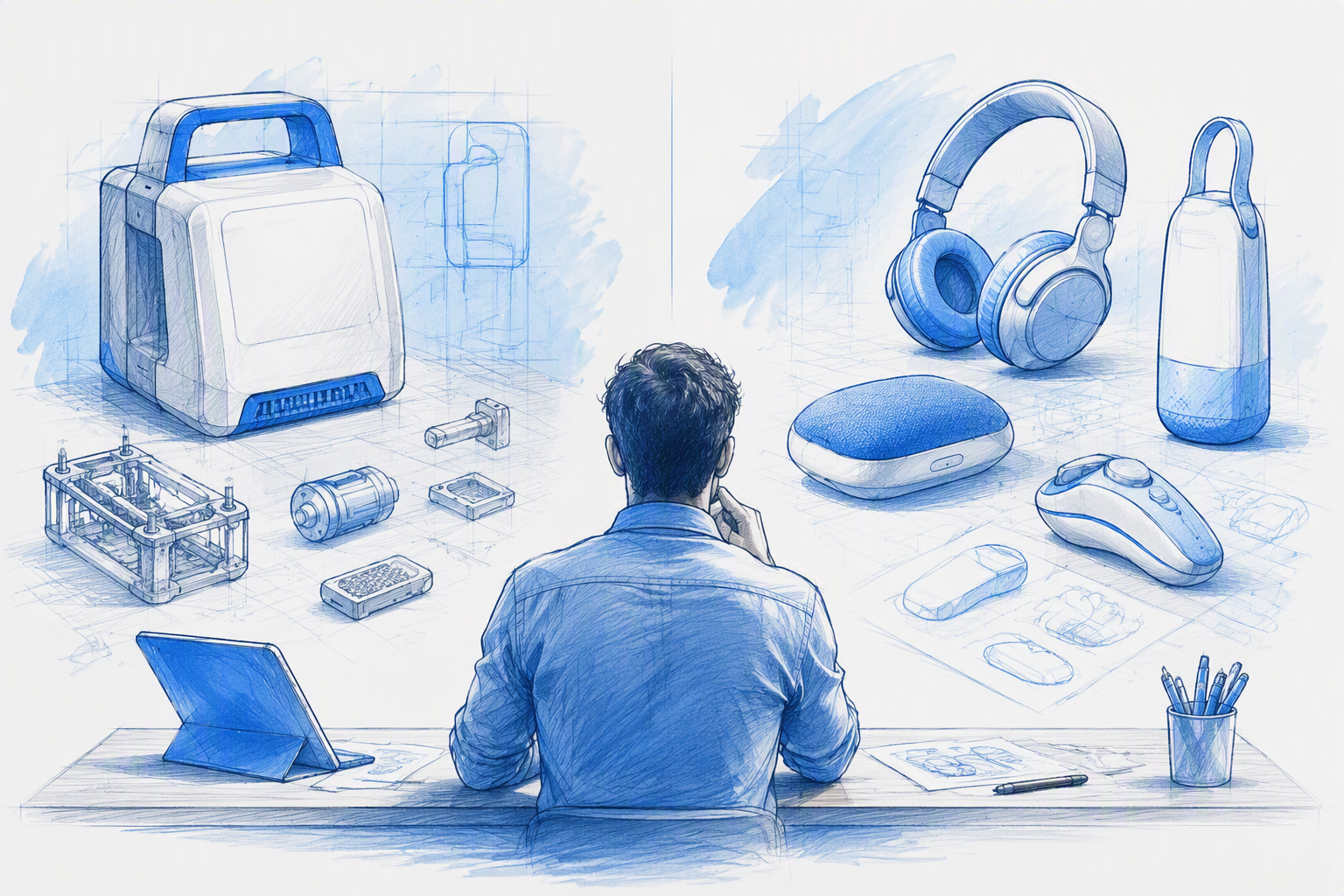
The terms sound similar, but the disciplines solve different problems. A freelance industrial designer develops physical products. A freelance product designer usually designs digital products.
At amajaying.com, we work on websites, apps, SaaS products, and software platforms—not manufactured objects.
Choose industrial design for physical products
Industrial designers can work across physical form, ergonomics, materials, CAD modelling, prototypes, production constraints, and manufacturing feasibility.
Products such as appliances, furniture, medical devices, and physical control systems therefore need industrial design expertise. Depending on the brief, the team may also require mechanical engineering, electronics, sourcing, or manufacturing specialists.
Digital design experience cannot replace those skills. A UX portfolio does not show whether someone can specify materials, test tolerances, or prepare an object for production.
Choose digital product design for software experiences
A freelance product designer works on how software is understood and used. Our scope can include user journeys, information architecture, interaction patterns, visual systems, prototypes, responsive behaviour, and collaboration with engineers.
Typical projects include:
- SaaS dashboards and workflows
- Onboarding and activation
- Mobile apps
- New software features
- Internal or customer platforms
- Conversion-focused websites
If that matches the brief, see how freelance product design turns product problems into shipped experiences. The goal is not simply to buy screens. It is to make a digital product clearer, more distinctive, and practical to build.
What I own as a freelance product designer
We treat freelance product design as senior design ownership rather than outsourced screen production. That means turning an incomplete brief into a clear, feasible experience while making key decisions visible.
From rough brief to validated product direction
We begin by clarifying the user and business problem, challenging assumptions, mapping critical flows, and identifying risky decisions. We also agree on useful success signals before visual polishing begins.
Discovery should match the project. A focused feature may need an audit, stakeholder context, existing evidence, and targeted validation—not a large research programme.
From UX structure to polished UI
Once the direction is clear, we translate product logic into wireframes, interaction models, visual hierarchy, reusable patterns, and responsive screens. Distinctive design matters, but never at the expense of comprehension, accessibility, or consistency.
Our approach to UX/UI design without the development handoff gap explains why interface craft and implementation thinking belong in the same process.
From Figma to implementation
A polished frame can hide unanswered questions. We define component behaviour, loading and error states, responsive rules, permissions, empty states, and interaction details.
We can also support design QA and implementation review. This keeps the approved design connected to what engineers can build.
Seven things to check before hiring a product designer freelance
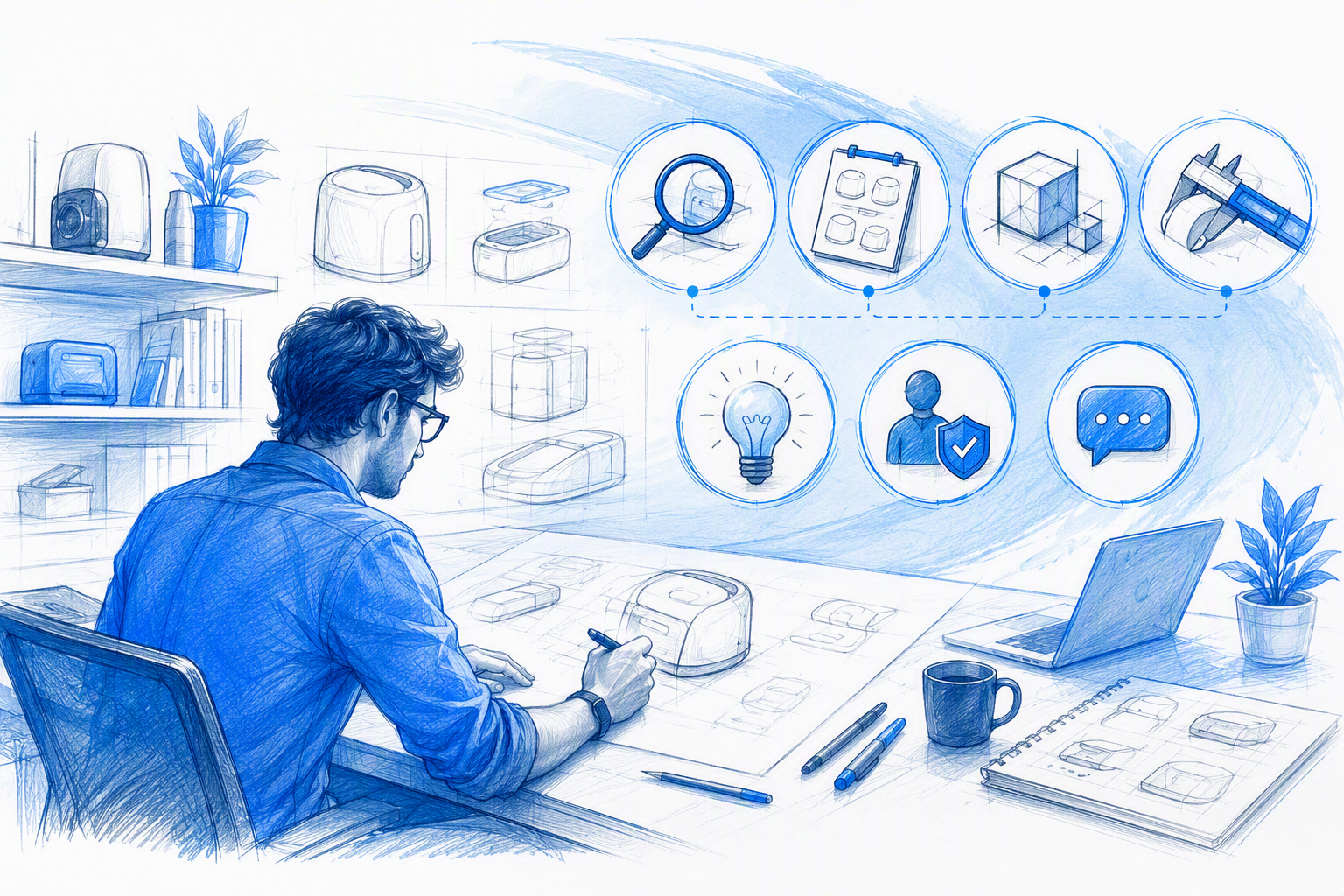
Job titles are easy to claim. We recommend evaluating observable evidence instead. For a fuller process, read how to find a product designer who delivers buildable work.
1–3: Problem definition, research judgment, and interaction design
- Problem definition: Look for evidence that the designer clarified or reframed the brief before producing screens.
- Research judgment: Ask why particular research or testing methods were chosen and what decisions they changed.
- Interaction design: Review flows, task logic, alternate paths, permissions, errors, and recovery states—not just the happy path.
4–7: Visual craft, prototyping, frontend awareness, and outcomes
- Visual craft: Assess hierarchy, typography, consistency, accessibility, responsiveness, and brand character.
- Purposeful prototyping: Ask which assumption, question, or interaction risk the prototype tested.
- Frontend awareness: Look for an understanding of browser behaviour, reusable components, content variation, and engineering constraints.
- Shipped outcomes: Prioritise work that explains what launched, what changed, and what the team learned.
Our guide to product designer portfolio criteria for hiring teams offers a more detailed checklist.
How to evaluate a freelance product designer’s case studies
Attractive screens are weak evidence on their own. A case study should show how decisions were made under real constraints.
Look beyond polished mockups
Find the original problem, the designer’s role, constraints, dependencies, and definition of success. Strong case studies may also show rejected directions, testing insights, iterations, and trade-offs.
When those details are missing, ask about them directly. Real product work is rarely as linear as a polished presentation suggests.
Ask what shipped and what changed
Separate speculative concepts from production work. Both can demonstrate craft, but only shipped work shows how the designer handled collaboration and implementation.
Where meaningful evidence exists, ask about changes in behaviour, usability, adoption, or business performance. If metrics are confidential or unavailable, the designer should still explain what changed and what was learned.
Verify collaboration and ownership
Ask which decisions the designer owned, what colleagues contributed, and how technical or commercial constraints affected the solution.
We also look for involvement during implementation. Clear case studies recognise researchers, writers, engineers, and product managers without obscuring the designer’s contribution.
When one hybrid UX, UI, and frontend designer is the efficient choice
A senior generalist is not automatically a compromise. For early-stage products and lean teams, one UX/UI designer with frontend awareness can preserve context from discovery through build review.
Where a hybrid model removes friction
This model can suit:
- MVPs and early-stage products
- Focused feature redesigns
- Lean product teams
- Design-led websites
- SaaS teams without senior internal design capacity
It can reduce duplicated context and unclear ownership. Frontend awareness also brings feasibility into design discussions before implementation starts.
Specialists still matter when the work demands them. Our comparison of a hybrid designer, agency, and in-house team helps teams assess the options.
Why handoff should not be a hard stop
Implementation raises questions that static screens cannot answer. We support interaction clarification, responsive review, design QA, component adjustments, and controlled iteration.
Figma should be a shared reference, not the point where design responsibility ends.
Engagement models and deliverables
The right engagement depends on product maturity, uncertainty, and risk. We recommend agreeing on the intended outcome before defining a list of outputs.
Our contract product designer engagement guide covers ownership, delivery, and commercial expectations in more detail.
Focused product or UX audit
An audit suits an existing feature or flow that is difficult to understand or use. Deliverables may include an annotated review, revised flow, key screen concepts, and prioritised recommendations.
Feature sprint or MVP design
A focused engagement can cover problem framing, critical journeys, wireframes, interface direction, prototypes, validation, responsive states, edge cases, and engineering guidance.
The aim is enough definition to build confidently—not documentation for its own sake.
Product redesign or embedded support
A redesign addresses a broader experience, while embedded support adds senior design capacity across a roadmap. Work may include updated journeys, feature designs, prototypes, interface systems, design QA, and build support.
Freelance product designer vs freelance content designer
These disciplines solve related but distinct problems. Content design improves understanding; product design connects content with interaction, visual systems, and technical behaviour.
Our comparison of a freelance content designer vs product designer can help teams decide whether they need one discipline or both.
What a freelance content designer typically owns
Content designers focus on terminology, instructions, error messages, content hierarchy, governance, and comprehension. Their expertise is particularly useful in regulated, multilingual, complex, or high-stakes journeys.
What a product designer owns
Product designers typically own flows, interaction architecture, layouts, components, prototypes, responsive states, and engineering collaboration. Many also write interface copy, but complex terminology or content governance may require a specialist.
When both disciplines should collaborate
Both can add value to onboarding, healthcare, financial workflows, complex settings, and guidance-heavy products. Clear ownership helps language and interaction support the same user intent.
Questions to ask before starting a freelance design engagement
A strong pre-hire conversation should clarify scope, dependencies, working style, and commercial fit.
Questions about ownership and validation
Ask:
- What will the designer own?
- What will they need from our team?
- How will they clarify the brief?
- Which decisions need research or testing?
- How will success be assessed?
- Who makes final product decisions?
Questions about engineering and delivery
Clarify how the designer works with engineers and what handoff includes beyond a Figma link. Discuss responsive behaviour, errors, empty states, permissions, feedback rounds, scope changes, design QA, and post-handoff availability.
Red flags to watch for
Watch for:
- The same unexplained process for every project
- Template-driven UI disconnected from the problem
- No evidence of constraints or iteration
- Unclear individual contribution
- Vague deliverables or feedback limits
- Missing edge cases and responsive behaviour
- No support once development starts
Work with a Bangalore-based freelance product designer
Teams searching for a freelance industrial designer in Bangalore should first confirm whether their product is physical or digital. We specialise in digital products: websites, apps, SaaS experiences, and software platforms.
Direct collaboration without a specialist chain
We work directly with founders, product leads, hiring managers, and engineers. Product context carries through problem framing, flows, visual design, prototyping, responsive decisions, and build review.
A clear next step for digital products
If the brief involves software rather than a manufactured object, review our work as a freelance product designer for startups and product teams.
A useful initial brief includes:
- Current product stage
- Main challenge
- Existing team
- Intended outcome
- Target timing
FAQ
Is a freelance industrial designer the same as a freelance product designer?
No. Industrial designers work on physical products, including form, materials, prototypes, and manufacturing constraints. Digital product designers work on software flows, interfaces, prototypes, responsive behaviour, and engineering collaboration.
When should we hire a freelance product designer?
Hire one when a website, app, SaaS feature, or digital platform needs experienced design ownership without an immediate full-time hire.
What should a freelance product designer deliver?
Deliverables may include user flows, wireframes, polished interfaces, prototypes, responsive states, components, edge cases, validation findings, and implementation guidance. The exact mix should support the agreed outcome.
How can we identify real product work in a portfolio?
Look for the original problem, constraints, ownership, iterations, collaboration, trade-offs, and what shipped. Strong case studies explain decisions rather than presenting final screens alone.
Do we need both a product designer and a content designer?
Sometimes. Add a content designer when terminology, regulation, multilingual content, governance, or high-stakes comprehension needs dedicated expertise.
Bring us the rough brief
Share the product stage, current challenge, team, intended outcome, and timing through amajaying.com. We’ll help turn the brief into a clear digital experience that users can understand and engineers can ship.