June’s AI goes on the first dates for you
Imagine you’re tired of swiping, and of first dates that go nowhere. Now imagine your AI goes on those first dates for you, and you only meet the people worth meeting.
You sign up, and June builds an AI version of you, your “AI soulmate”, from your photos, a few answers and what your AI assistant already knows about you. That AI goes on dates with other people’s AIs. Every morning you get your matches with a score and the reasons behind it, and you decide who you actually want to meet.
Here’s the whole app, from opening it for the first time to chatting with a match. Each step has its own section below, so click any of them to jump there.
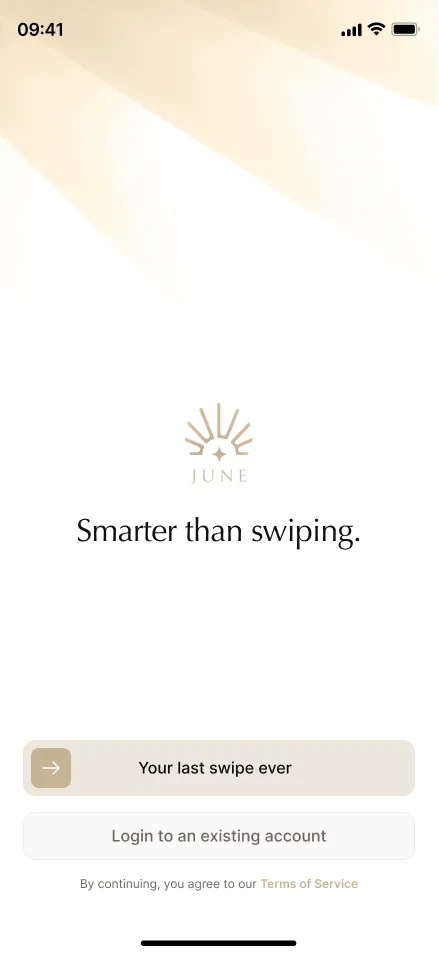 01Who are you?Sign-up in small steps
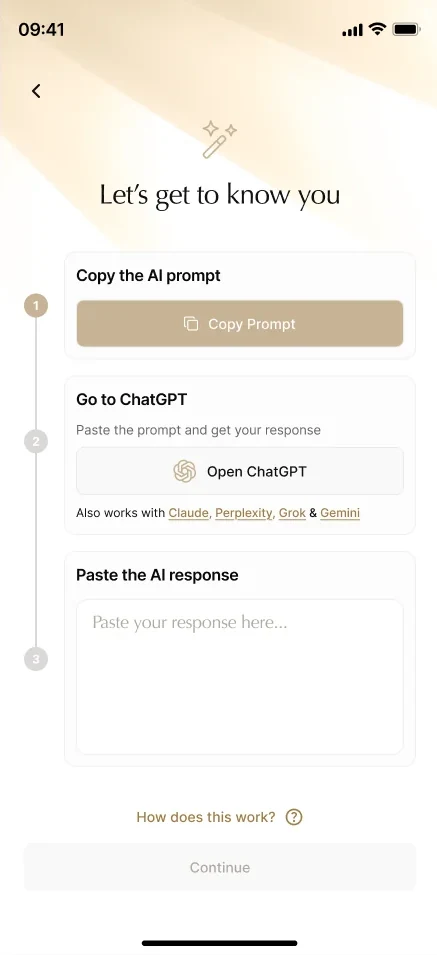 02How well do you know me?Using what your AI already knows
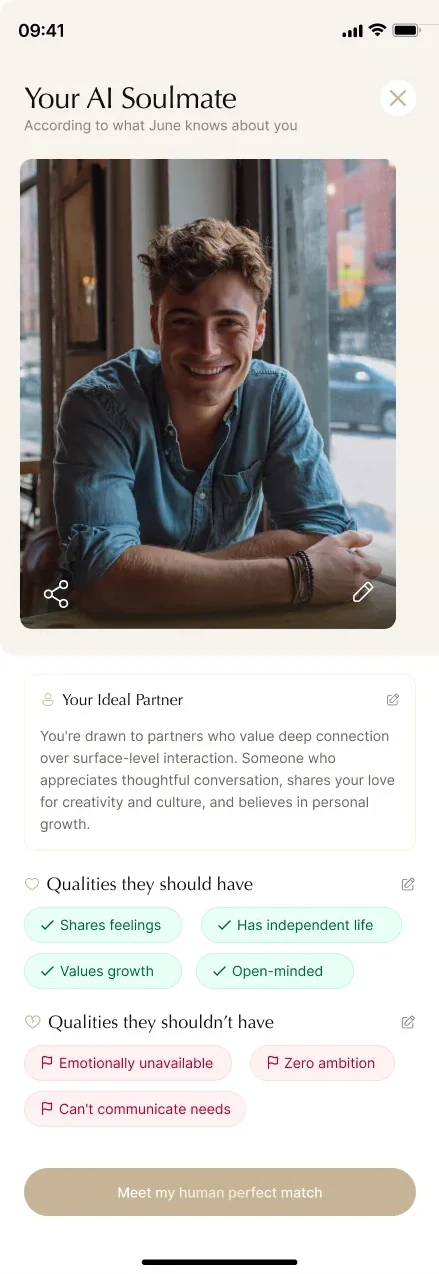 03Is that really me?An AI soulmate you can check
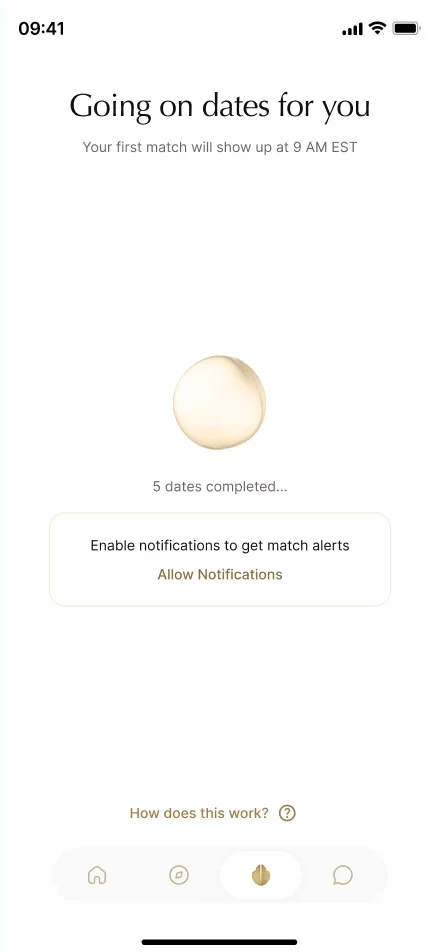 04What happens now?Dates while you wait
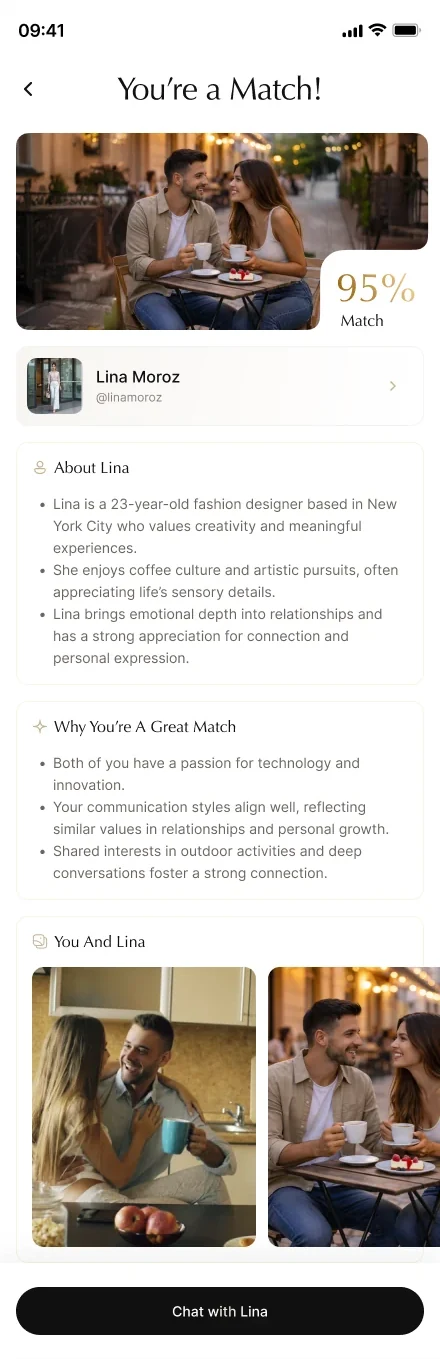 05Why them?A match that explains itself
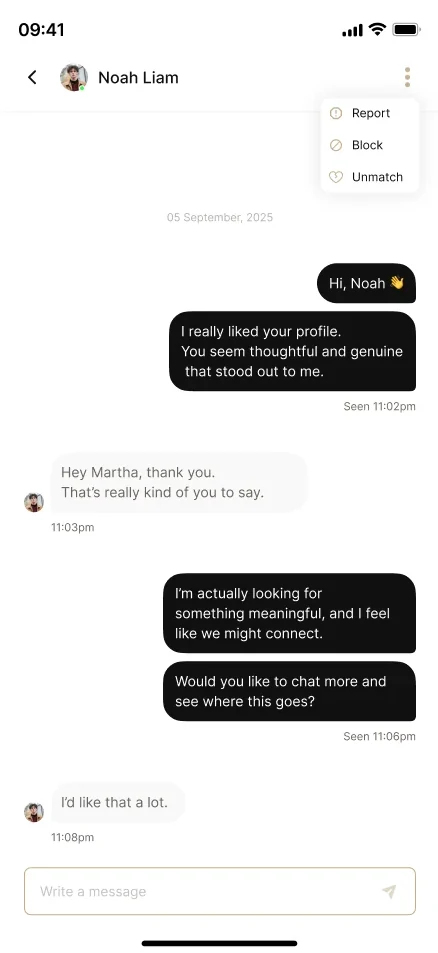 06What next?Chat, share and stay safe
The feel mattered as much as the flow. It’s a dating app, so I wanted everything to feel warm and calm: cream and gold, a serif font for the big moments, and a soft orb that “thinks” while June is out on dates for you.
June had to know people well, without a long survey
- June has to know you well, and quickly. Matching on personality needs a lot of information, and long surveys are exactly where people drop off.
- The AI works while you’re away. Dates happen in the background, so the app has to make waiting feel like something is happening.
- A match score needs a reason. “95% match” means nothing unless you can see why, and “not a match” has to be honest without being hurtful.
- It’s very personal data. Photos, location, a summary of who you are. Every time we asked for something, we needed a reason people would believe.
The shortcut: use what people’s AI already knows about them
Get someone from “what is this?” to a profile June can actually match on, in minutes and without a survey, and make the first match worth the wait.
People already have an AI that knows them well. If June uses that instead of asking everything again, onboarding gets shorter and the matches get better. And if every match comes with its reasons, people will trust the AI enough to go on the real date.
- The app ships, and real people can download it.
- People actually sign up once it’s live.
- The ChatGPT onboarding survives into the real product, instead of being swapped for a survey.
Who are you?
Ask one question per screen
One question per screen
01“Smarter than swiping.”
02Errors show up right where they happen.
03Too young, told kindly and early.
04Socials are optional.
05A good photo next to a bad one.
06It tells you what to fix, not just “try again”.
07Then more photos to show your world.
08Two prompts that sound like you.
Sign-up is one question per screen, with errors right where they happen. Photos matter more here than in most apps, so the photo step shows a good example next to a bad one and tells you exactly what to fix.
How well do you know me?
Let people bring what ChatGPT knows about them
Using what your AI already knows
01Three steps: copy, ask, paste.
02The answer comes back into June.
03“How June works”, in plain words.
Instead of a personality quiz, June gives you a prompt to paste into ChatGPT, which already knows you from months of chats, and you paste the answer back. I split it into three numbered steps so a strange task feels simple.
What I said no toA 40-question personality survey. Every dating app has one, and that’s where people quit.
Is that really me?
Show people their AI version, and let them fix it
An AI soulmate you can read and edit
01Imagining your soulmate…
02One last step, and why.
03Your AI soulmate, which you can read and edit.
June shows you the soulmate it built: a picture, your ideal partner, and the qualities they should and shouldn’t have. Every part has an edit button, so you can fix it before it goes on a single date.
What I said no toKeeping the matching profile hidden. If an AI is going on dates for you, you should be able to read what it thinks of you.
What happens now?
Make the wait feel like something is happening
Making the wait feel like something is happening
01Going on dates for you.
02Notifications, with a preview first.
03A second ask, with a wink.
04Not launched here yet, so you’re first in line.
There’s nothing to swipe, because June is busy. The screen shows how many dates are done and exactly when your first match will show up, and it asks for notifications only when that makes sense.
Why them?
Show why two people match
A match that explains itself
0195%, and exactly why.
02Photos unlock when you’re interested.
03What they want, as June reads it.
04Not a match, and why.
A match opens with the score and the reasons behind it, and their photos stay blurred until you say you’re interested. When it’s not a match, June tells you why too.
What I said no toLeading with a big photo and a “Start Dating” button. An earlier version of the profile did that. In the final one, the score and the reasons come first, and photos only unlock when you’re interested.
What next?
Then chat, share and stay safe
Chat, share and stay safe
01It’s a match.
02Report, block and unmatch, one tap away.
03Share your profile, message included.
Report, Block and Unmatch are always one tap away in the chat. Every profile also gets a link with a ready-made message, so people can invite their friends.
Live on the App Store since November 2025, with 100+ sign-ups in New York
Back to what I said I’d watch
Did it ship?
June launched on the App Store as “June: AI Matchmaker” on November 22, 2025, starting in New York. It’s on version 2.2.7 now.
Did people sign up?
100+ people signed up after launch.
Did the ChatGPT onboarding make it into the real product?
It’s step one on june.date: “We give you one prompt to copy into ChatGPT. From there, our AI creates your entire profile.”
Use what people have already told their AI
- Use the context people already have.People have already told their AI assistant who they are. Building a bridge to that was faster and gave June more to work with than any survey I could have written.
- If an AI decides for you, show its reasons.The AI soulmate, the match reasons and the not-a-match reasons all exist so people can check the AI instead of just trusting it.
- Waiting is a screen too.When the product works in the background, the waiting screen is the product. A count, a time and a reason to come back make it feel alive.
Sending people to ChatGPT mid sign-up felt like a shortcut
I thoughtSending people to ChatGPT in the middle of onboarding would feel like a detour.
Turned outSplit into three numbered steps, it read more like a shortcut than a chore.
I thought“Not a match” was a screen to soften or hide.
Turned outExplaining a no ended up being one of the most respectful moments in the app.